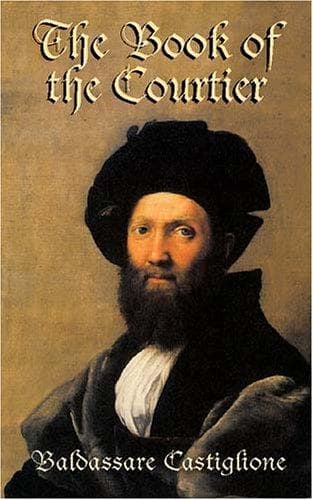
The Book of the CourtierCastiglione, Baldassarre, conte
History
The Book of the Courtier
Castiglione, Baldassarre, conte
Courtesy -- Early works to 1800; Courts and courtiers -- Early works to 1800
“Afterwards from time to time, not only in Tuscany but in all Italy,
among noble men and those well versed in courts and arms and letters,
there arose some desire to speak and write more elegantly than had been
done in that rude and uncultivated age, when the blaze of the calamities
inflicted by the barbarians was not yet quenched. Many words were laid
aside, as well in the city of Florence itself and in all Tuscany as in
the rest of Italy, and instead of them others were taken up; and herein
there thus occurred that change which takes place in all human affairs
and has always happened in the case of the other languages also. For if
those earliest writings in ancient Latin had survived until now, we
should see that Evander and Turnus[83] and the other Latins of that age
spoke differently from the last Roman kings and the first consuls. See
how the verses that the Salian priests chaunted were hardly understood
by posterity;[84] but being established in that form by the first
founders, out of religious reverence they were not changed. Likewise the
orators and poets continued one after another to lay aside many words
used by their predecessors: thus Antonius, Crassus, Hortensius and
Cicero avoided many of Cato’s words, and Virgil avoided many of
Ennius’s;[85] and the others did the same. For although they had
reverence for antiquity, yet they did not esteem it so highly as to
consent to be bound by it in the way you would have us bound by it now.
Nay they criticised it where they saw fit, as did Horace, who says that
his forefathers lauded Plautus foolishly, and thinks he has a right to
gather in new words.[86] And in sundry places Cicero reprehends many of
his predecessors, and slightingly affirms that Sergius Galba’s orations
had an antique flavour,[87] and says that Ennius himself disprized his
predecessors in certain things: so that if we would imitate the
ancients, in doing so we shall not imitate them. And Virgil, who (you
say) imitated Homer, did not imitate him in language.
33.—“Therefore I for my part should always avoid using these antique
words, save however in certain places, and seldom even there; and it
seems to me that whoever uses them otherwise makes a mistake, not less
than he who, in order to imitate the ancients, should wish to feed on
acorns when wheat had been discovered in plenty. And since you say that
by their mere splendour of antiquity, antique words so adorn every
subject, however mean it be, that they can make it worthy of much
praise,—I say that I do not set such store, not only by these antique
words but even by good ones, as to think that they ought in reason to be
prized without the pith of beautiful thoughts; for to divide thought
from words is to divide soul from body, which can be done in neither
case without destruction.
Public-domain text, read in full here on John Shaqi.
Reviews
Reviews
No reviews yet
Be the first to share your thoughts on this work.
Elsewhere in the archive
Join the Discussion
Join the discussion
Sign in to leave a comment or review.
Sign InorCreate an account