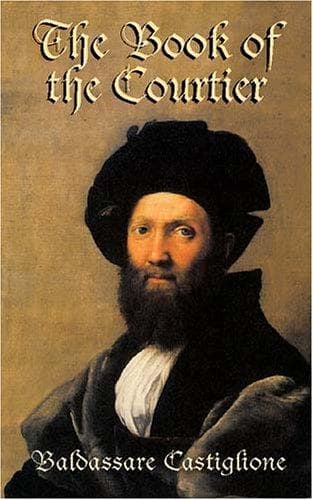
The Book of the CourtierCastiglione, Baldassarre, conte
History
The Book of the Courtier
Castiglione, Baldassarre, conte
Courtesy -- Early works to 1800; Courts and courtiers -- Early works to 1800
“In such fashion would I have our Courtier speak and write; and not only
choose rich and elegant words from every part of Italy, but I should
even praise him for sometimes using some of those French and Spanish
terms that are already accepted by our custom.[88] Thus it would not
displease me if on occasion he were to say, _primor_ (excellence); or
_acertare_ (to succeed), _aventurare_ (to run a risk successfully); or
_ripassare una persona con ragionamento_, meaning to sound a person and
to talk with him in order to gain perfect knowledge of him; or _un
cavalier senza rimproccio_ (a cavalier without reproach), _attilato_
(elegant), _creato d’un principe_ (a prince’s creature), and other like
terms, provided he might hope to be understood.[89]
“Sometimes I would have him use a few words in a sense other than that
proper to them, to transpose them aptly, and as it were to graft them,
like the branch of a tree, upon a more appropriate trunk,—so as to make
them more attractive and beautiful, and as it were to bring things
within the range of our vision, and within hand-touch as we say, to the
delight of him who hears or reads. Nor would I have him scruple to form
new words and in new figures of speech, deriving them tastefully from
the Latins, as of old the Latins derived them from the Greeks.
35.—“Now if among the lettered men of good talent and judgment who
to-day are found in our midst, there were a few who would take care to
write in this language (as I have described) things worthy of being
read, we should soon see it studied and abounding in beautiful terms and
figures, and capable of being written in as well as is any other
whatsoever; and if it were not pure old Tuscan, it would be
Italian,—universal, copious and varied, and in a way like a delightful
garden full of various flowers and fruits. Nor would this be a novel
thing; for from the four dialects that the Greek writers had in use,[90]
they culled words, forms and figures from each as they saw fit, and
thence they brought forth another dialect which was called ‘common,’ and
later they called all five by the single name Greek. And although the
Attic dialect was more elegant, pure and copious than the others, good
writers who were not Athenians by birth did not so affect it as to be
unrecognizable by their style and by the perfume (as it were) and
essence of their native speech. Nor yet were they disprized for this; on
the contrary those who tried to seem too Athenian, were censured for it.
Among the Latin writers too, many non-Romans were highly esteemed in
their day, although there was not found in them that typical purity of
the Roman tongue which men of other race can rarely acquire. Thus Titus
Livius was not at all discarded, although someone professed to have
detected a Paduan flavour in him;[91] nor was Virgil, albeit reproached
with not speaking Roman. Moreover, as you know, many writers of
barbarian race were read and esteemed at Rome.
Public-domain text, read in full here on John Shaqi.
Reviews
Reviews
No reviews yet
Be the first to share your thoughts on this work.
Elsewhere in the archive
Join the Discussion
Join the discussion
Sign in to leave a comment or review.
Sign InorCreate an account