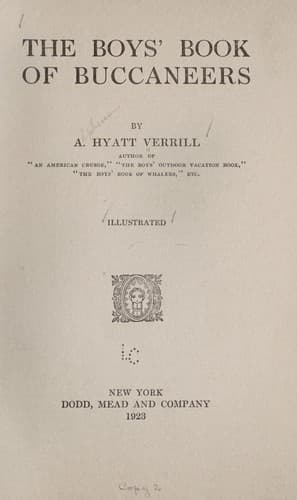
The boys' book of buccaneersVerrill, A. Hyatt (Alpheus Hyatt)
History
The boys' book of buccaneers
Verrill, A. Hyatt (Alpheus Hyatt)
Buccaneers -- Juvenile literature
“Meanwhile the war between England and the United States had been going
on for nearly two years. It had been felt but little on the shores of
the Gulf, however, and the Baratarians, and even the more law-abiding
citizens, scarcely knew that there was a conflict. But in September,
1814, the smuggler-pirate colony was started by the sudden appearance
of an armed British brig off their island haunt. Hastily ordering out
his private cutter, Jean Lafitte boarded the war vessel, invited the
officers ashore and feasted them right royally. Then, as the merry
party sat back and puffed at their fine Havanas the smuggler chieftain
was presented with a letter from the British commandant at Pensacola.
It was an offer of a high commission in the British army and a fee of
$30,000, provided Lafitte would use his forces in assisting the British
in their proposed invasion of Louisiana.
“The Frenchman hesitated, replied that it would take him some time to
decide upon such an important matter and asked for ten days in which to
consider it. This was willingly granted, the officers were escorted
back to their ship and, well satisfied with their progress, they
prepared to await Lafitte’s reply, which they felt convinced would be
favorable. But even before they had stepped upon their ship’s decks a
messenger had been despatched post-haste by Lafitte to the Louisiana
Legislature. Not only did the messenger carry a complete account of the
British plans of invasion as divulged by the officers, but he also
carried the letter from the English commandant and a letter from
Lafitte offering the services of himself and his men in the defense of
the state.
“Instantly Governor Claiborne called a council of the army, navy and
militia officers and showed them Lafitte’s communication. The officials
could not believe that Lafitte—outlaw and smuggler and so-called
pirate—could possess any sentiments of patriotism, and one and all
declared that, in their opinions, the papers were forgeries and that
Lafitte had submitted them in order to prevent the authorities from
interfering with his plans.
Public-domain text, read in full here on John Shaqi.
Reviews
Reviews
No reviews yet
Be the first to share your thoughts on this work.
Elsewhere in the archive
Join the Discussion
Join the discussion
Sign in to leave a comment or review.
Sign InorCreate an account