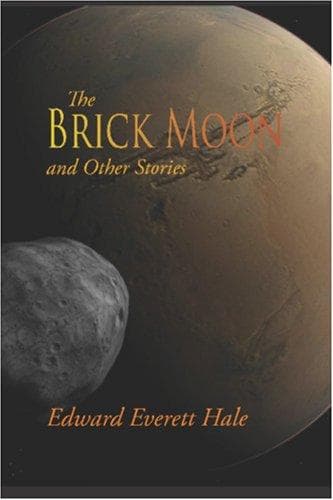
The Brick Moon, and Other StoriesHale, Edward Everett
Science
The Brick Moon, and Other Stories
Hale, Edward Everett
Short stories; United States -- Social life and customs -- 19th century -- Fiction
Then Matty ventured to ask what she and her mother
had wondered about once and again,--why these particular
bits of paper were so necessary. Surely other vouchers,
or certified copies, or books of account could be found
somewhere!
"Yes! I know; you would say so. And if it were all
yesterday, and was all in these lazy times of peace,
you would say true. But you see, in the first place,
this is ever so long ago. Then, in the second place, it
was in the heat of war, when everything was on a gigantic
scale, and things had to be done in unheard-of ways.
Then, chiefly, this particular business involved the
buying up of I do not know who among the Rebels there in
Texas, and among their allies on the other side the Rio
Grande. This old Spaniard, whom mamma remembers, and
whom I just remember, he was the chief captain among the
turncoats, and there were two or three others, F. F. men
in their places,--"First Family men," that means, you
know; but after they did this work they did not stay in
their places long. No! papa says he was mighty careful;
that he had three of the scoundrels sworn before
notaries, or rather before one notary, and had their
receipts and acknowledgments stamped with his notary's
seal. Still, it did not do to have a word said in public
then. And after everything succeeded so perfectly, after
the troops landed without a shot, and found all the base
ready for them, corn and pork just where they wanted
it,--why, then everybody was too gratified to think of
imagining, as they do now, that papa had stolen that
money that bought the pork and the corn."
"I wish they were only half as grateful now," he
said, after a pause.
"Tom," said Matty, eagerly, "who was that notary?"
"I thought of that, too," said Tom. "There is no
doubt who it was. It was old Gilbert; you must remember
his sign, just below Faulkner's on the avenue. But in
the first place, Gilbert died just after our taking
Richmond. In the second place, he never knew what the
papers were--and he executed twenty such sets of papers
every day, very likely. All he could say, at the very
best, would be that at such a time father brought in an
old Spaniard and two or three other greasers, and that he
took their acknowledgments of something."
"I do not know that, Tom," said the girl, without
flinching at his mannish information. "If notaries in
Washington are anything like notaries in novels, that man
kept a record or register of his work. If he was not
very unlike everybody else who lives and works here, he
left a very destitute widow when he died. Tom, I shall
go after church and hunt up the Widow Gilbert. I shall
ask her for her husband's books, and shall tell her why
I want them."
The girl dropped her voice and said: "Tom, I shall
ask her IN HIS NAME."
"God grant it does any good, dear girl," said he.
"Far be it from me to say that you shall not try--"
Public-domain text, read in full here on John Shaqi.
Reviews
Reviews
No reviews yet
Be the first to share your thoughts on this work.
Elsewhere in the archive
Join the Discussion
Join the discussion
Sign in to leave a comment or review.
Sign InorCreate an account