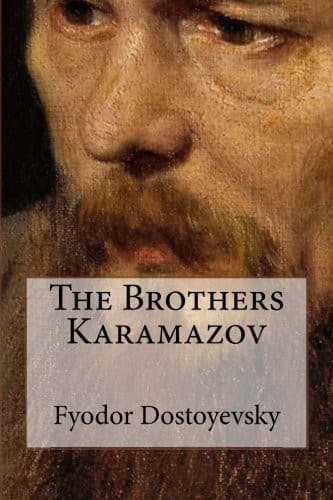
Brothers -- Fiction; Didactic fiction; Fathers and sons -- Fiction; Russia -- Social life and customs -- 1533-1917 -- Fiction
“A precious admission, in spite of your ‘not a bit the same.’ I ask you
why your Jesuits and Inquisitors have united simply for vile material
gain? Why can there not be among them one martyr oppressed by great
sorrow and loving humanity? You see, only suppose that there was one
such man among all those who desire nothing but filthy material gain—if
there’s only one like my old Inquisitor, who had himself eaten roots in
the desert and made frenzied efforts to subdue his flesh to make
himself free and perfect. But yet all his life he loved humanity, and
suddenly his eyes were opened, and he saw that it is no great moral
blessedness to attain perfection and freedom, if at the same time one
gains the conviction that millions of God’s creatures have been created
as a mockery, that they will never be capable of using their freedom,
that these poor rebels can never turn into giants to complete the
tower, that it was not for such geese that the great idealist dreamt
his dream of harmony. Seeing all that he turned back and joined—the
clever people. Surely that could have happened?”
“Joined whom, what clever people?” cried Alyosha, completely carried
away. “They have no such great cleverness and no mysteries and
secrets.... Perhaps nothing but Atheism, that’s all their secret. Your
Inquisitor does not believe in God, that’s his secret!”
“What if it is so! At last you have guessed it. It’s perfectly true,
it’s true that that’s the whole secret, but isn’t that suffering, at
least for a man like that, who has wasted his whole life in the desert
and yet could not shake off his incurable love of humanity? In his old
age he reached the clear conviction that nothing but the advice of the
great dread spirit could build up any tolerable sort of life for the
feeble, unruly, ‘incomplete, empirical creatures created in jest.’ And
so, convinced of this, he sees that he must follow the counsel of the
wise spirit, the dread spirit of death and destruction, and therefore
accept lying and deception, and lead men consciously to death and
destruction, and yet deceive them all the way so that they may not
notice where they are being led, that the poor blind creatures may at
least on the way think themselves happy. And note, the deception is in
the name of Him in Whose ideal the old man had so fervently believed
all his life long. Is not that tragic? And if only one such stood at
the head of the whole army ‘filled with the lust of power only for the
sake of filthy gain’—would not one such be enough to make a tragedy?
More than that, one such standing at the head is enough to create the
actual leading idea of the Roman Church with all its armies and
Jesuits, its highest idea. I tell you frankly that I firmly believe
that there has always been such a man among those who stood at the head
of the movement. Who knows, there may have been some such even among
the Roman Popes. Who knows, perhaps the spirit of that accursed old man
Public-domain text, read in full here on John Shaqi.
Reviews
Reviews
No reviews yet
Be the first to share your thoughts on this work.
Elsewhere in the archive
Join the Discussion
Join the discussion
Sign in to leave a comment or review.
Sign InorCreate an account