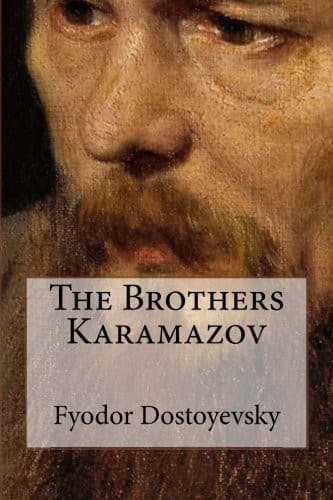
Brothers -- Fiction; Didactic fiction; Fathers and sons -- Fiction; Russia -- Social life and customs -- 1533-1917 -- Fiction
When with an anxious and aching heart Alyosha went into his elder’s
cell, he stood still almost astonished. Instead of a sick man at his
last gasp, perhaps unconscious, as he had feared to find him, he saw
him sitting up in his chair and, though weak and exhausted, his face
was bright and cheerful, he was surrounded by visitors and engaged in a
quiet and joyful conversation. But he had only got up from his bed a
quarter of an hour before Alyosha’s arrival; his visitors had gathered
together in his cell earlier, waiting for him to wake, having received
a most confident assurance from Father Païssy that “the teacher would
get up, and as he had himself promised in the morning, converse once
more with those dear to his heart.” This promise and indeed every word
of the dying elder Father Païssy put implicit trust in. If he had seen
him unconscious, if he had seen him breathe his last, and yet had his
promise that he would rise up and say good-by to him, he would not have
believed perhaps even in death, but would still have expected the dead
man to recover and fulfill his promise. In the morning as he lay down
to sleep, Father Zossima had told him positively: “I shall not die
without the delight of another conversation with you, beloved of my
heart. I shall look once more on your dear face and pour out my heart
to you once again.” The monks, who had gathered for this probably last
conversation with Father Zossima, had all been his devoted friends for
many years. There were four of them: Father Iosif and Father Païssy,
Father Mihaïl, the warden of the hermitage, a man not very old and far
from being learned. He was of humble origin, of strong will and
steadfast faith, of austere appearance, but of deep tenderness, though
he obviously concealed it as though he were almost ashamed of it. The
fourth, Father Anfim, was a very old and humble little monk of the
poorest peasant class. He was almost illiterate, and very quiet,
scarcely speaking to any one. He was the humblest of the humble, and
looked as though he had been frightened by something great and awful
beyond the scope of his intelligence. Father Zossima had a great
affection for this timorous man, and always treated him with marked
respect, though perhaps there was no one he had known to whom he had
said less, in spite of the fact that he had spent years wandering about
holy Russia with him. That was very long ago, forty years before, when
Father Zossima first began his life as a monk in a poor and little
monastery at Kostroma, and when, shortly after, he had accompanied
Father Anfim on his pilgrimage to collect alms for their poor
monastery.
Public-domain text, read in full here on John Shaqi.
Reviews
Reviews
No reviews yet
Be the first to share your thoughts on this work.
Elsewhere in the archive
Join the Discussion
Join the discussion
Sign in to leave a comment or review.
Sign InorCreate an account