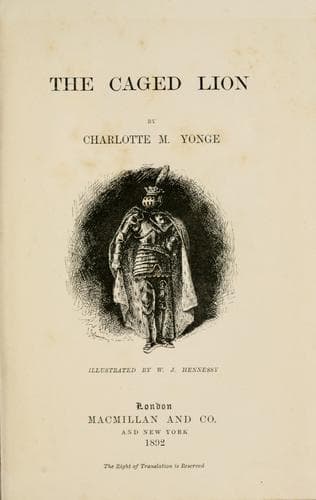
The Caged LionYonge, Charlotte M. (Charlotte Mary)
History
The Caged Lion
Yonge, Charlotte M. (Charlotte Mary)
James I, King of Scotland, 1394-1437 -- Fiction; Scotland -- History -- James I, 1406-1437 -- Fiction
A sharp conflict it was--between a keen and aggravated disease,
apparently pleurisy coming upon pulmonary affection of long standing, and
a strong and resolute nature, unquenched by suffering, and backed by the
violent remedies of a half-instructed period. Those who watched him, and
strove to fulfil the directions of the physicians, hardly marked the
lapse of hours; even though more than one day and night had passed ere in
the early twilight of a long summer's morn he sank into a sleep, his face
still distressed, but less acutely, and his breath heavy and labouring,
though without the severe pain.
The watchers felt that here might be the turning point, and stood or sat
around, not daring to change their postures, or utter the slightest word.
Suddenly, James, who stood nearest, leaning against the wall, with his
eyes fixed on the face of the sleeper, was aware of a hand on his
shoulder, and looking round, saw in the now full light Bedford's face--so
pale, haggard, and replete with anxiety, so dusty and travel-stained,
that Henry, awakening at that moment, exclaimed, 'Ha, John!' And as his
brother was slow to reply--'Has the day gone against thee? How was it?
Never fear to speak, brother; thou art safe; and I know thou hast done
valiantly. Valour is never lost, whether in defeat or success. Speak,
John. Take it not so much to heart.'
'There has been no battle, Harry,' said Bedford, gathering voice with
difficulty. 'The Dauphin would not abide our coming, but broke up his
camp.'
'Beshrew thee, man!' said Henry; 'but I thought thou wast just off a
flight!'
'Dost think one can ride fast only for a flight?' said Bedford. 'Ah,
would that it had been the loss of ten battles rather than this!'
And he fell on his knees, grasping Henry's hand, and hiding his face
against the bed, with the same instinct of turning to him for comfort
with which the young motherless children of Henry of Bolingbroke, when
turned adrift among the rude Beaufort progeny of John of Gaunt, had clung
to their eldest brother, and found tenderness in his love and protection
in his fearlessness; so that few royal brethren ever loved better than
Henry and John of Lancaster.
'It was well and kindly done, John,' said Henry; 'and thou hast come at a
good time; for, thanks be to God, the pain hath left me; and if it were
not for this burthen of heaviness and weariness, I should be more at ease
than I have been for many weeks.'
But as he spoke, there was that both in his face and voice that chilled
with a dread certainty the hearts of those who hung over him.
'Is my wife come? I could see her now,' he wistfully asked.
Alas! no. Sir Lewis Robsart, the knight attached to her service,
faltered, with a certain shame and difficulty, that the Queen would come
when her orisons at Notre Dame were performed.
It was his last disappointment; but still he bore it cheerily.
Public-domain text, read in full here on John Shaqi.
Reviews
Reviews
No reviews yet
Be the first to share your thoughts on this work.
Elsewhere in the archive
Join the Discussion
Join the discussion
Sign in to leave a comment or review.
Sign InorCreate an account