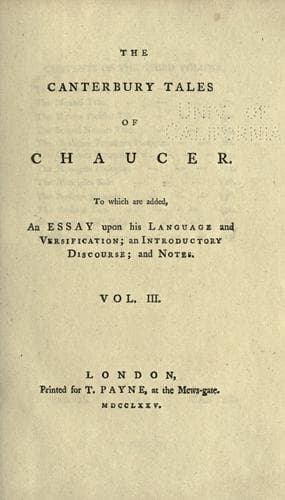
The Canterbury Tales, and Other PoemsChaucer, Geoffrey
ReligionChristian
The Canterbury Tales, and Other Poems
Chaucer, Geoffrey
Chaucer, Geoffrey, -1400; Christian pilgrims and pilgrimages -- Poetry; English poetry -- Middle English, 1100-1500
See ye not, Lord, how mankind it destroyeth?
A hundred thousand bodies of mankind
Have rockes slain, *all be they not in mind;* *though they are
Which mankind is so fair part of thy work, forgotten*
Thou madest it like to thine owen mark.* *image
Then seemed it ye had a great cherte* *love, affection
Toward mankind; but how then may it be
That ye such meanes make it to destroy?
Which meanes do no good, but ever annoy.
I wot well, clerkes will say as them lest,* *please
By arguments, that all is for the best,
Although I can the causes not y-know;
But thilke* God that made the wind to blow, *that
As keep my lord, this is my conclusion:
To clerks leave I all disputation:
But would to God that all these rockes blake
Were sunken into helle for his sake
These rockes slay mine hearte for the fear.”
Thus would she say, with many a piteous tear.
Her friendes saw that it was no disport
To roame by the sea, but discomfort,
And shope* them for to playe somewhere else. *arranged
They leade her by rivers and by wells,
And eke in other places delectables;
They dancen, and they play at chess and tables.* *backgammon
So on a day, right in the morning-tide,
Unto a garden that was there beside,
In which that they had made their ordinance* *provision, arrangement
Of victual, and of other purveyance,
They go and play them all the longe day:
And this was on the sixth morrow of May,
Which May had painted with his softe showers
This garden full of leaves and of flowers:
And craft of manne’s hand so curiously
Arrayed had this garden truely,
That never was there garden of such price,* *value, praise
*But if* it were the very Paradise. *unless*
Th’odour of flowers, and the freshe sight,
Would have maked any hearte light
That e’er was born, *but if* too great sickness *unless*
Or too great sorrow held it in distress;
So full it was of beauty and pleasance.
And after dinner they began to dance
And sing also, save Dorigen alone
Who made alway her complaint and her moan,
For she saw not him on the dance go
That was her husband, and her love also;
But natheless she must a time abide
And with good hope let her sorrow slide.
Public-domain text, read in full here on John Shaqi.
Reviews
Reviews
No reviews yet
Be the first to share your thoughts on this work.
Elsewhere in the archive
Join the Discussion
Join the discussion
Sign in to leave a comment or review.
Sign InorCreate an account