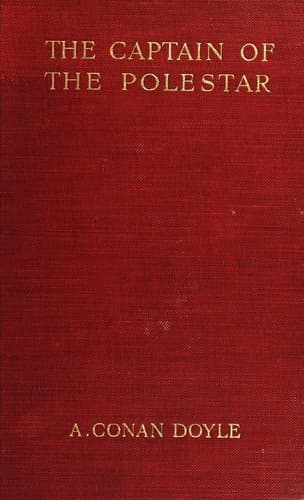
The Captain of the Polestar, and Other TalesDoyle, Arthur Conan
General
The Captain of the Polestar, and Other Tales
Doyle, Arthur Conan
Great Britain -- Social life and customs -- 19th century -- Fiction; Short stories, English
We spent some time examining the portraits. Miss Northcott’s father and
mother were apparently ordinary mortals enough, and I could not detect
in either of them any traces of the character which showed itself in
their daughter’s face. There was one old daguerreotype, however, which
arrested my attention. It represented a man of about the age of forty,
and strikingly handsome. He was clean shaven, and extraordinary power
was expressed upon his prominent lower jaw and firm, straight mouth.
His eyes were somewhat deeply set in his head, however, and there was a
snake-like flattening at the upper part of his forehead, which detracted
from his appearance. I almost involuntarily, when I saw the head,
pointed to it, and exclaimed--
“There is your prototype in your family, Miss Northcott.”
“Do you think so?” she said. “I am afraid you are paying me a very bad
compliment. Uncle Anthony was always considered the black sheep of the
family.”
“Indeed,” I answered; “my remark was an unfortunate one, then.”
“Oh, don’t mind that,” she said; “I always thought myself that he was
worth all of them put together. He was an officer in the Forty-first
Regiment, and he was killed in action during the Persian War--so he died
nobly, at any rate.”
“That’s the sort of death I should like to die,” said Cowles, his dark
eyes flashing, as they would when he was excited; “I often wish I had
taken to my father’s profession instead of this vile pill-compounding
drudgery.”
“Come, Jack, you are not going to die any sort of death yet,” she said,
tenderly taking his hand in hers.
I could not understand the woman. There was such an extraordinary
mixture of masculine decision and womanly tenderness about her, with
the consciousness of something all her own in the background, that she
fairly puzzled me. I hardly knew, therefore, how to answer Cowles
when, as we walked down the street together, he asked the comprehensive
question--
“Well, what do you think of her?”
“I think she is wonderfully beautiful,” I answered guardedly.
“That, of course,” he replied irritably. “You knew that before you
came!”
“I think she is very clever too,” I remarked.
Barrington Cowles walked on for some time, and then he suddenly turned
on me with the strange question--
“Do you think she is cruel? Do you think she is the sort of girl who
would take a pleasure in inflicting pain?”
“Well, really,” I answered, “I have hardly had time to form an opinion.”
We then walked on for some time in silence.
“She is an old fool,” at length muttered Cowles. “She is mad.”
“Who is?” I asked.
“Why, that old woman--that aunt of Kate’s--Mrs. Merton, or whatever her
name is.”
Then I knew that my poor colourless friend had been speaking to Cowles,
but he never said anything more as to the nature of her communication.
Public-domain text, read in full here on John Shaqi.
Reviews
Reviews
No reviews yet
Be the first to share your thoughts on this work.
Elsewhere in the archive
Join the Discussion
Join the discussion
Sign in to leave a comment or review.
Sign InorCreate an account