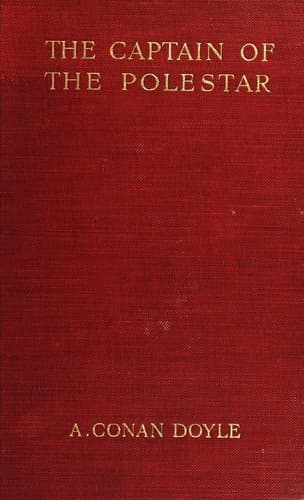
The Captain of the Polestar, and Other TalesDoyle, Arthur Conan
General
The Captain of the Polestar, and Other Tales
Doyle, Arthur Conan
Great Britain -- Social life and customs -- 19th century -- Fiction; Short stories, English
“Such is my story, Mr. Vansittart Smith. I need not say more to a man of
your perception. By a strange chance you have this night looked upon the
face of the woman whom I loved in those far-off days. There were many
rings with crystals in the case, and I had to test for the platinum to
be sure of the one which I wanted. A glance at the crystal has shown me
that the liquid is indeed within it, and that I shall at last be able
to shake off that accursed health which has been worse to me than the
foulest disease. I have nothing more to say to you. I have unburdened
myself. You may tell my story or you may withhold it at your pleasure.
The choice rests with you. I owe you some amends, for you have had a
narrow escape of your life this night. I was a desperate man, and not
to be baulked in my purpose. Had I seen you before the thing was done,
I might have put it beyond your power to oppose me or to raise an alarm.
This is the door. It leads into the Rue de Rivoli. Good night!”
The Englishman glanced back. For a moment the lean figure of Sosra
the Egyptian stood framed in the narrow doorway. The next the door had
slammed, and the heavy rasping of a bolt broke on the silent night.
It was on the second day after his return to London that Mr. John
Vansittart Smith saw the following concise narrative in the Paris
correspondence of the Times:--
“Curious Occurrence in the Louvre.--Yesterday morning a strange
discovery was made in the principal Egyptian Chamber. The ouvriers who
are employed to clean out the rooms in the morning found one of the
attendants lying dead upon the floor with his arms round one of the
mummies. So close was his embrace that it was only with the utmost
difficulty that they were separated. One of the cases containing
valuable rings had been opened and rifled. The authorities are of
opinion that the man was bearing away the mummy with some idea of
selling it to a private collector, but that he was struck down in the
very act by long-standing disease of the heart. It is said that he was a
man of uncertain age and eccentric habits, without any living relations
to mourn over his dramatic and untimely end.”
Public-domain text, read in full here on John Shaqi.
Reviews
Reviews
No reviews yet
Be the first to share your thoughts on this work.
Elsewhere in the archive
Join the Discussion
Join the discussion
Sign in to leave a comment or review.
Sign InorCreate an account