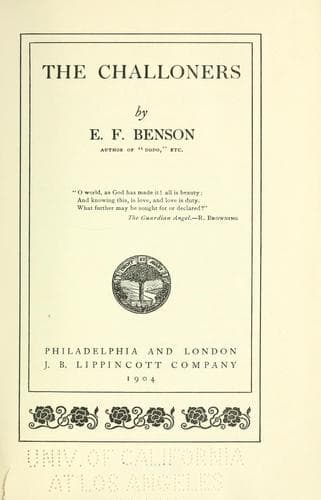
Clergy -- England -- Fiction; England -- Social life and customs -- Fiction; Families -- England -- Fiction
Helen sat with her chin resting on her hand a moment without replying.
“I don’t know,” she said, at length. “Don’t let us think about it just
now, Frank. Let this afternoon be perfect. But I can tell you this, that
though it may possibly be very painful, it will make no difference to
me. I shall be very sorry--very, very sorry, but---- That ‘but’ is you,
if you understand.”
“Thank you, my darling,” said he.
* * * * *
Mr. Challoner carried a very thankful heart with him as he went on his
various errands that afternoon. To see Helen happily married was a
constant desire and prayer of his, and though he would with willingness
and thankfulness have given her to the keeping of any good man who could
support her and a family, he did not attempt to disguise from himself
the satisfaction he felt at her having made what is vulgarly called “a
great match.” She had the gifts which should enable her to fill a great
position, and to play a great part worthily was a bigger and a finer
thing,--though he had said “duty was duty and there is neither less nor
greater” than to work on a smaller scale. More than that, he had, with
all his personal unworldliness, a good deal of pride of race, which
Frank with his undeniable birth and breeding gratified. For the man
himself, also, he felt a very decided liking and respect; he was an
admirable landlord, in spite of his avowed laziness; he was generally
considered to get through the day’s work with credit. In the House of
Lords, also, he had already achieved a certain reputation for eminent
common sense; and though to advocates of extremes his speeches might
appear commonplace, that was rather the fault of those who held an
extreme view. In other words, he lent his wealth and position to the
support of moderation, much as Lord Flintshire had done.
Another matter dearer to Mr. Challoner’s heart than the obscurities of
fiscal affairs was that Frank was, if not a pillar, at any rate a very
sound piece of the fabric in the twin-towered building called “Church
and State.” His patronage was always given to clergy of moderate views
who did not indulge in what Mr. Challoner called “idolatrous and Romish
practices,” while, on the other hand, he always voted dead against any
attempt to subtract from the power or position of the English Church as
by law established. “A staunch Churchman,” said Mr. Challoner to
himself, as he walked with his long, rapid strides through the pathway
hedged about with the yellowing corn.
Public-domain text, read in full here on John Shaqi.
Reviews
Reviews
No reviews yet
Be the first to share your thoughts on this work.
Elsewhere in the archive
Join the Discussion
Join the discussion
Sign in to leave a comment or review.
Sign InorCreate an account