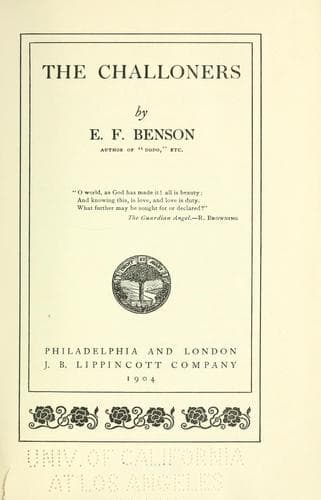
Clergy -- England -- Fiction; England -- Social life and customs -- Fiction; Families -- England -- Fiction
with ways and methods not his own, through his intolerance of that of
which he had no ability of comprehension, through his instinctive
dismissal of all that seemed to him unessential in life, whether it was
the benediction of the evening hour, the piano-playing of Martin, the
sweet eyes of Helen, through all, at moments like these, when his human
emotions were most aroused, his view pierced triumphant and saw only the
cross of Christ pointing heavenward. Towards that, and that alone, the
essential nature of the man was directed, even as the compass-needle,
though deflected and distracted by other neighbouring agencies, is
essentially undeviating and loyal in its allegiance to the north. His
disapprovals, his censorious judgments, his want of sympathy for what he
did not understand were only the husk of the man, and it was the very
strength of his central devotion that made him intolerant of any who
seemed to lapse in things great or small from his own measure of
fervour. Extreme cases, indeed, the case of the Jew, the Turk, the
infidel, he left with faith to the mercy of God, though his human
comprehension did not see how they could be capable of receiving it. He
did not know; he left them before the throne of Infinite Compassion, and
turned his thoughts elsewhere, to his own work of ministering to the
sick and needy, to the cultivation of the intellect, the usury of that
sterling talent given to man, and all that should make a man more
capable of worship, a fitter instrument in the hand of the great
Artificer.
Public-domain text, read in full here on John Shaqi.
Reviews
Reviews
No reviews yet
Be the first to share your thoughts on this work.
Elsewhere in the archive
Join the Discussion
Join the discussion
Sign in to leave a comment or review.
Sign InorCreate an account