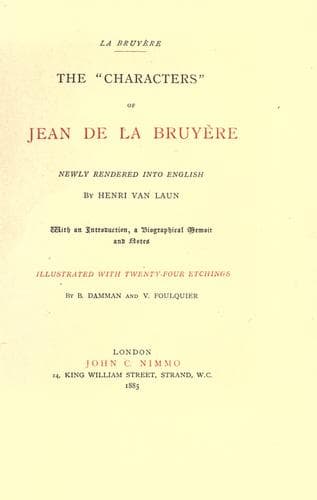
The "Characters" of Jean de La BruyèreLa Bruyère, Jean de
General
The "Characters" of Jean de La Bruyère
La Bruyère, Jean de
Character sketches -- Early works to 1800; Characters and characteristics
(20.) What a painful habit and what a troublesome kind of obligation it
must be for certain persons to be continually anxious of meeting one
another, yet when they meet to have nothing but trifles to say to one
another, and to communicate reciprocally things which were previously
known to both and of no matter of importance to either; to enter a room
merely to leave it again; to go out after dinner,[376] only to come
home in the evening, highly satisfied with seeing in five hours three
Swiss,[377] a woman they hardly knew, and another they scarcely liked.
Whoever will rightly consider the value of time, and how irreparable
its loss is, must lament bitterly such wretched trifling.[378]
(21.) In town, people are brought up in complete ignorance of rural and
country affairs; they can scarcely distinguish flax from hemp, wheat
from rye, and neither of them from meslin; they are satisfied with
eating, drinking, and dressing. Do not mention to a large number of
townsfolk such words as fallowland, staddles, layers, or after-grass,
if you wish to be understood, for they will not think it is their
mother-tongue. Speak to some of them of measures, tariffs, taxes,[379]
and to others of appeals, petitions, decrees, and injunctions; for they
know the world, and above all, what is ugly and vulgar in it; but they
do not know Nature, its beginning, growth, gifts, and bounteousness.
Their ignorance often is voluntary, and based on the conceit they have
of their own callings and talents. There is not a low pettifogger
in his dark and grimy room, his brain teeming with the most wicked
legal quibbles, who does not prefer himself to a husbandman, who,
blest of Heaven, cultivates the land, sows when it is needed, and
gathers a rich harvest; and if at any time the former hears mention
made of the first men or the patriarchs, their rural lives and their
husbandry, he wonders how people could have been living in those days
without lawyers, commissioners, presidents, or solicitors, and cannot
understand how they could ever have done without rolls-offices, courts
of judicature, and refreshment-rooms.
Public-domain text, read in full here on John Shaqi.
Reviews
Reviews
No reviews yet
Be the first to share your thoughts on this work.
Elsewhere in the archive
Join the Discussion
Join the discussion
Sign in to leave a comment or review.
Sign InorCreate an account