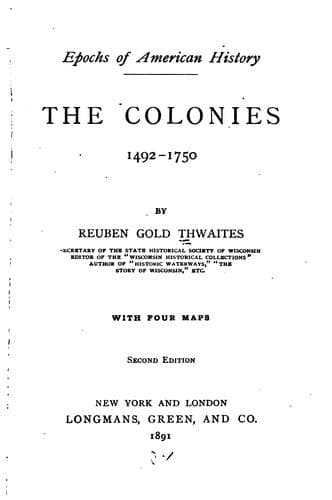
United States -- History -- Colonial period, ca. 1600-1775
There was little intercommunication, except between the larger towns, and
the facilities for travel were meagre. Rude farm-wagons, two-wheeled
chaises, and saddle-horses were the chief means of conveyance over the
rough, stony roads; and on the many and far-reaching rivers, travellers and
traders proceeded leisurely by slow-moving craft. New Jersey was traversed
by the highways between New York and Philadelphia, over which post-boys
rode weekly with the mail in saddlebags. Taverns were in every town in New
York and Pennsylvania, and were favorite meeting-places for the village and
country folk; but in New Jersey it required legislation to induce villages
to maintain "ordinaries" for wayfarers.
96. Intellectual and Moral Conditions.
Sidenote: Education.
Under the Dutch domination common schools flourished in New York, each town
supporting them by public aid. The English, however, jealous of educational
enterprises under charge of a nonconforming church, suffered them to fall
into neglect. Thus at the close of the seventeenth century education was
neither general nor of good quality. The English Society for the
Propagation of the Gospel established an excellent Church of England school
in New York city (1704), but the Dutch did not take kindly to it; they long
clung to their mother-tongue and the few rude schools of their own
ordering. In Pennsylvania but little attempt was made by the English in the
direction of popular education outside of the capital, where was opened
(1698) the now famous Penn Charter School, destined for fifty years to be
the only public school in the province. The Germans and Moravians
maintained some good private schools in the larger Pennsylvania and New
Jersey towns, but educational facilities in the rural places were generally
wretched, where there were any at all.
Sidenote: Religion.
Public-domain text, read in full here on John Shaqi.
Reviews
Reviews
No reviews yet
Be the first to share your thoughts on this work.
Elsewhere in the archive
Join the Discussion
Join the discussion
Sign in to leave a comment or review.
Sign InorCreate an account