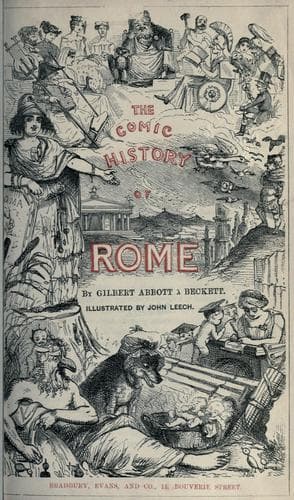
The Comic History of RomeÀ Beckett, Gilbert Abbott
History
The Comic History of Rome
À Beckett, Gilbert Abbott
Rome -- History -- Humor; Wit and humor, Pictorial
The Romans having recovered from the blow, or series of blows, they had
received from Porsenna, were prepared to turn their anger on the subject
nearest at hand, and the Sabines were conveniently situated to receive a
great deal of it. Irritated by the enemy, the Sabines lost their temper
towards each other, and several of them, among whom were Atta Clausus,
or Appius Claudius and family, went over to Rome. The renegades were
received by their new allies with honour; for apostacy, which should
carry with it disgrace, was even in those days treated too often as a
virtue. The Claudii were made patricians of Rome, which seems to have
always courted converts by offering the highest price to those who were
ready to part with their old opinions and principles. Valerius
Publicola--or as some call him, Popli-cola, one who honoured the
people--died soon after the last-mentioned event, and received the
compliment of a magnificent funeral. The procession commenced with a
band of pipers, every one of whom the public paid, and the crown was
carried in state; but on such an occasion as this, the empty crown could
be suggestive of nothing but its own hollowness.
The armour belonging to the deceased was buried with him, as if in
mockery of its uselessness against the attacks of the grim enemy; and
the face was painted, as is still the custom in Italy, where the attempt
to disguise the complexion to which we must come at last, only gives to
the reality a hideousness neither necessary nor natural. After the
funeral of a great or a much lamented man, it was usual to hang branches
of cypress on his house, and his gates were decorated with pine by those
who were left pining after him.
It was about this period that the great battle of Lake Regillus is
supposed to have been fought, when the Latins, who had been trying to
translate into Latin everything belonging to Rome, were at length taught
that the Roman character was strong enough to maintain its own
individuality.
Public-domain text, read in full here on John Shaqi.
Reviews
Reviews
No reviews yet
Be the first to share your thoughts on this work.
Join the Discussion
Join the discussion
Sign in to leave a comment or review.
Sign InorCreate an account