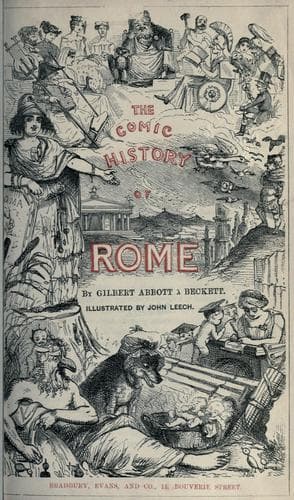
The Comic History of RomeÀ Beckett, Gilbert Abbott
History
The Comic History of Rome
À Beckett, Gilbert Abbott
Rome -- History -- Humor; Wit and humor, Pictorial
They fought with the energy of desperation, for each rank had sworn an
oath, and there was an affidavit, therefore, on every file, to do
execution on the Volscians. Never were bankrupts more determined to
avoid a surrender than the band of defaulters who went forth to meet the
foe with a confidence, which would, probably, have disappeared had they
recognised at the meeting a single one of their creditors. The success
of the Romans was complete, and those who had fought upon the
understanding that every blow they struck was to wipe out a debt,
returned home in the expectation that every old liability had been
rubbed off, and that they would be free to rub on as they best could for
the future. They were, however, doomed to bitter disappointment, for
Appius Claudius declared that no faith ought to be kept with those who
had kept no faith with their creditors; and all the debtors who were not
prepared to pay upon the nail had the screw cruelly applied to them. The
debtors were sent back to their prisons, and many an unfortunate
insolvent, as he thought of the imposition that had been practised upon
him, could only cast his eyes upon the walls of his dungeon, and murmur
at the dreadful cell of which he had become the victim. The bolts and
bars of oppression would have brought liberty to a dead lock, had it not
been for the people outside the gaols, who threatened to rise for the
purpose of falling upon the tyrants. At this critical period Rome was
menaced by the Sabines, when the plebeians were called upon to enlist;
but they declared they would be recruits of the very rawest description
if they allowed themselves to be again done as they had been already.
Public meetings were held on the Esquiline and Aventine hills, where
liberal sentiments, which have now become as old as the hills
themselves, fell upon the popular ear with all the charm and force of
novelty. The patricians were divided as to the best means of dealing
with the difficulty their own misconduct had created, and it was obvious
that the fatal error having been committed of refusing to accede to a
just demand, the scarcely less dangerous mistake of yielding to violence
and clamour was the only course that could now be followed. The
patricians would have stood by their order; but the difficulty was to
know how public order, as well as their own order, could be preserved;
and it was at length agreed that a dictator should be appointed. The
choice fell upon M. Valerius, a moderate man, whom the plebeians could
trust, for he came of a good stock, his father being no other than that
great gun of the popular party, the famous Publicola. A large army was
soon ready to take the field, or to take anything else that came in the
ordinary course of battle. Valerius marched against the Sabines, who
fled, or, more literally speaking, decamped; for they left behind them
their camp, which was taken by the enemy.
Public-domain text, read in full here on John Shaqi.
Reviews
Reviews
No reviews yet
Be the first to share your thoughts on this work.
Join the Discussion
Join the discussion
Sign in to leave a comment or review.
Sign InorCreate an account