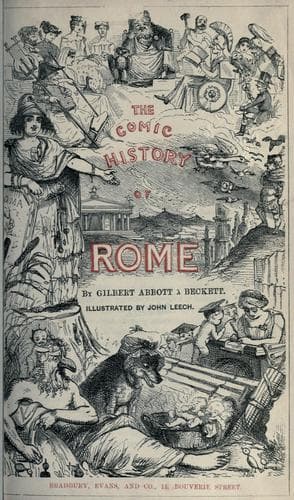
The Comic History of RomeÀ Beckett, Gilbert Abbott
History
The Comic History of Rome
À Beckett, Gilbert Abbott
Rome -- History -- Humor; Wit and humor, Pictorial
Appius Claudius had been chosen Consul, with P. Servilius as a
colleague, in the year of the City 258, when a miserable old insolvent,
with his hair like a mat, giving evidence of the severe rubs that had
fallen on his head, rushed into the forum. His face had the paleness of
ashes, and many tried to sift his countenance, in which the marks of his
having been ground down to the dust were plainly visible. His back bore
traces of recent scores, every one of which he declared should be
accounted as a score to be paid off upon his oppressors. His farm had
been burned down, and its contents burned up; his cattle had been driven
he knew not where, while he himself had been driven to distraction. The
tax-gatherer had, nevertheless, been as punctual as ever in his calls,
and having soundly rated the ruined agriculturist for not being ready
with his rates, the latter had been compelled to run into debt; for the
Romans had not made insurance against fire any feature of their policy.
Having been unable to pay his debts, the impoverished farmer became the
slave of his creditor; and the shoulders of the former bore
unmistakeable marks of the latter having got the whip-hand of him. The
excitement in the forum was intense; for all were seized with
indignation, who might possibly be seized for debt; and every one who
owed anything to anybody began to feel that he owed a great deal more to
common humanity. A popular outbreak seemed to be close at hand, and the
two Consuls consulted together on the crisis. Appius Claudius gave it as
his opinion, that as the people were put up, the best way was to put
them down; but his colleague, Servilius, was an advocate for a milder
regimen. At this juncture, news arrived of the Volscian army having set
out for Rome; and the plebeians being called upon to enlist, declared
that they would not enlist themselves at the bidding of those who would
do nothing to enlist their sympathies. In this difficult dilemma, P.
Servilius promised that if they would come out and fight, they should be
released from prison during the war; and guaranteed that if they would
present a bold front to the enemy's sword, their backs should be safe
from the scourge of domestic tyranny. There was an immediate rush of
insolvents into the ranks, which were soon filled almost to overflowing;
for as a great majority of the population happened to be hopelessly in
debt, a summons to the field was the only sort of summons their
appearance to which might have been reasonably relied upon.
Public-domain text, read in full here on John Shaqi.
Reviews
Reviews
No reviews yet
Be the first to share your thoughts on this work.
Join the Discussion
Join the discussion
Sign in to leave a comment or review.
Sign InorCreate an account