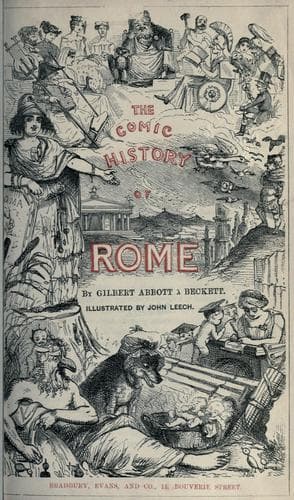
The Comic History of RomeÀ Beckett, Gilbert Abbott
History
The Comic History of Rome
À Beckett, Gilbert Abbott
Rome -- History -- Humor; Wit and humor, Pictorial
While Rome was suffering from want of corn, it was wasting the very
flower of its population in a war with the Volscians. Among the most
distinguished warriors on the side of the Romans was Caius Marcius, a
young patrician, who led all his own clients into an action in which the
defendants--the unfortunate Volscians--were subjected to enormous
damages. He subsequently proceeded against Corioli, which made an
obstinate defence; but was ultimately beaten, and compelled to pay the
whole of the costs of the conflict. From this affair he took the name of
Coriolanus, by which he is better known than by his original appellation
of C. Marcius, for mankind will too often award the largest measure of
fame to the most extensive perpetrator of mischief; and he who would
carve himself a name, may carve it much more deeply and durably with the
sword than with any other instrument.
When the corn arrived from Sicily, the popular party proposed a
gratuitous distribution of the boon; but the patricians, headed by
Coriolanus, who was a tyrant in grain, recommended that the plebeians
should pay for what they required. Complaint is never so open-mouthed as
when it has nothing to eat; and the people became desperate when they
found Coriolanus advising, without a scruple, that not a grain should be
given, nor an ear lent to their sufferings. He proposed the abolition of
the Tribunes as the condition of food being supplied to the people; but
they, becoming every day more crusty from the want of bread, insisted on
his being tried for treason. Coriolanus saw the people waxing resolute
to seal his doom, and he accordingly made his escape, so that when the
time came for him to be tried, he was found wanting. Judgment went
against him by default; his name was struck out of the list of
patricians--a sort of peerage of the period. He was sentenced, moreover,
to _aquæ et ignis interdictio_--prohibition from fire and water; a
punishment which, looking at the fiery nature of all spirituous liquors,
may be fancifully supposed to have involved especially a stoppage of
grog, as it certainly prevented everybody from entertaining him. This
sentence amounted, in fact, to banishment; and, indeed, it was designed
to do so; for the interdiction of fire and water left the culprit
nothing on earth but air, which of course it was quite impossible to
live upon.
[Illustration: Coriolanus parting from his Wife and Family.]
Public-domain text, read in full here on John Shaqi.
Reviews
Reviews
No reviews yet
Be the first to share your thoughts on this work.
Elsewhere in the archive
Join the Discussion
Join the discussion
Sign in to leave a comment or review.
Sign InorCreate an account