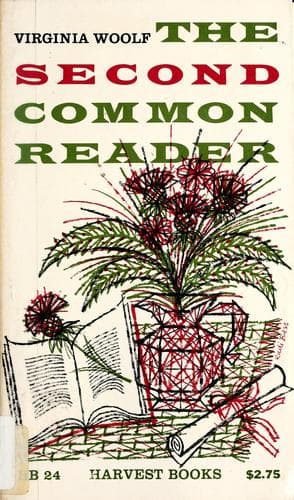
English literature -- History and criticism; Literature, Modern -- History and criticism
It is probable that if Miss Cassandra Austen had had her way, we should
have had nothing of Jane Austen’s except her novels. To her elder sister
alone did she write freely; to her alone she confided her hopes and, if
rumour is true, the one great disappointment of her life; but when Miss
Cassandra Austen grew old, and the growth of her sister’s fame made her
suspect that a time might come when strangers would pry and scholars
speculate, she burnt, at great cost to herself, every letter that could
gratify their curiosity, and spared only what she judged too trivial to
be of interest.
Hence our knowledge of Jane Austen is derived from a little gossip, a
few letters, and her books. As for the gossip, gossip which has survived
its day is never despicable; with a little rearrangement it suits our
purpose admirably. For example, Jane “is not at all pretty and very
prim, unlike a girl of twelve . . . Jane is whimsical and affected,”
says little Philadelphia Austen of her cousin. Then we have Mrs.
Mitford, who knew the Austens as girls and thought Jane “the prettiest,
silliest, most affected, husband-hunting butterfly she ever remembers”.
Next, there is Miss Mitford’s anonymous friend “who visits her now [and]
says that she has stiffened into the most perpendicular, precise,
taciturn piece of ‘single blessedness’ that ever existed, and that,
until _Pride and Prejudice_ showed what a precious gem was hidden in
that unbending case, she was no more regarded in society than a poker or
firescreen. . . . The case is very different now,” the good lady goes on;
“she is still a poker—but a poker of whom everybody is afraid. . . .
A wit, a delineator of character, who does not talk is terrific
indeed!” On the other side, of course, there are the Austens, a race
little given to panegyric of themselves, but nevertheless, they say, her
brothers “were very fond and very proud of her. They were attached to
her by her talents, her virtues, and her engaging manners, and each
loved afterwards to fancy a resemblance in some niece or daughter of his
own to the dear sister Jane, whose perfect equal they yet never expected
to see.” Charming but perpendicular, loved at home but feared by
strangers, biting of tongue but tender of heart—these contrasts are by
no means incompatible, and when we turn to the novels we shall find
ourselves stumbling there too over the same complexities in the writer.
Public-domain text, read in full here on John Shaqi.
Reviews
Reviews
No reviews yet
Be the first to share your thoughts on this work.
Elsewhere in the archive
Join the Discussion
Join the discussion
Sign in to leave a comment or review.
Sign InorCreate an account