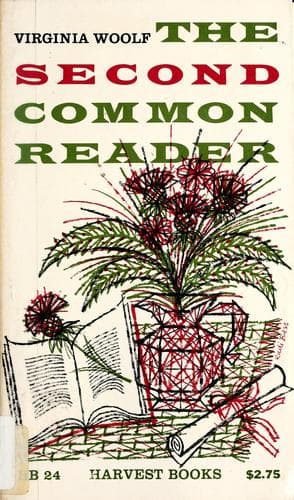
English literature -- History and criticism; Literature, Modern -- History and criticism
How, we are made to wonder,
will Emma behave when Lord Osborne and Tom Musgrove make their call at
five minutes before three, just as Mary is bringing in the tray and the
knife-case? It is an extremely awkward situation. The young men are
accustomed to much greater refinement. Emma may prove herself ill-bred,
vulgar, a nonentity. The turns and twists of the dialogue keep us on the
tenterhooks of suspense. Our attention is half upon the present moment,
half upon the future. And when, in the end, Emma behaves in such a way
as to vindicate our highest hopes of her, we are moved as if we had been
made witnesses of a matter of the highest importance. Here, indeed, in
this unfinished and in the main inferior story are all the elements of
Jane Austen’s greatness. It has the permanent quality of literature.
Think away the surface animation, the likeness to life, and there
remains to provide a deeper pleasure, an exquisite discrimination of
human values. Dismiss this too from the mind and one can dwell with
extreme satisfaction upon the more abstract art which, in the ball-room
scene, so varies the emotions and proportions the parts that it is
possible to enjoy it, as one enjoys poetry, for itself, and not as a
link which carries the story this way and that.
But the gossip says of Jane Austen that she was perpendicular, precise,
and taciturn—“a poker of whom everybody is afraid”. Of this too there
are traces; she could be merciless enough; she is one of the most
consistent satirists in the whole of literature. Those first angular
chapters of _The Watsons_ prove that hers was not a prolific genius; she
had not, like Emily Brontë, merely to open the door to make herself
felt. Humbly and gaily she collected the twigs and straws out of which
the nest was to be made and placed them neatly together. The twigs and
straws were a little dry and a little dusty in themselves. There was the
big house and the little house; a tea party, a dinner party, and an
occasional picnic; life was hedged in by valuable connections and
adequate incomes; by muddy roads, wet feet, and a tendency on the part
of the ladies to get tired; a little money supported it, a little
consequence, and the education commonly enjoyed by upper middle-class
families living in the country. Vice, adventure, passion were left
outside. But of all this prosiness, of all this littleness, she evades
nothing, and nothing is slurred over. Patiently and precisely she tells
us how they “made no stop anywhere till they reached Newbury, where a
comfortable meal, uniting dinner and supper, wound up the enjoyments and
fatigues of the day”. Nor does she pay to conventions merely the tribute
of lip homage; she believes in them besides accepting them. When she is
describing a clergyman, like Edmund Bertram, or a sailor, in particular,
she appears debarred by the sanctity of his office from the free use of
her chief tool, the comic genius, and is apt therefore to lapse into
Public-domain text, read in full here on John Shaqi.
Reviews
Reviews
No reviews yet
Be the first to share your thoughts on this work.
Elsewhere in the archive
Join the Discussion
Join the discussion
Sign in to leave a comment or review.
Sign InorCreate an account