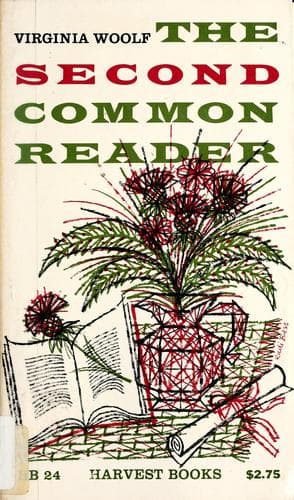
English literature -- History and criticism; Literature, Modern -- History and criticism
We accept; we feel the delicious warmth
and release of spirit which the great creative writers alone procure for
us. As one comes back to the books after years of absence they pour out,
even against our expectation, the same store of energy and heat, so that
we want more than anything to idle in the warmth as in the sun beating
down from the red orchard wall. If there is an element of unthinking
abandonment in thus submitting to the humours of Midland farmers and
their wives, that, too, is right in the circumstances. We scarcely wish
to analyse what we feel to be so large and deeply human. And when we
consider how distant in time the world of Shepperton and Hayslope is,
and how remote the minds of farmer and agricultural labourers from those
of most of George Eliot’s readers, we can only attribute the ease and
pleasure with which we ramble from house to smithy, from cottage parlour
to rectory garden, to the fact that George Eliot makes us share their
lives, not in a spirit of condescension or of curiosity, but in a spirit
of sympathy. She is no satirist. The movement of her mind was too slow
and cumbersome to lend itself to comedy. But she gathers in her large
grasp a great bunch of the main elements of human nature and groups them
loosely together with a tolerant and wholesome understanding which, as
one finds upon re-reading, has not only kept her figures fresh and free,
but has given them an unexpected hold upon our laughter and tears. There
is the famous Mrs. Poyser. It would have been easy to work her
idiosyncrasies to death, and, as it is, perhaps, George Eliot gets her
laugh in the same place a little too often. But memory, after the book
is shut, brings out, as sometimes in real life, the details and
subtleties which some more salient characteristic has prevented us from
noticing at the time. We recollect that her health was not good. There
were occasions upon which she said nothing at all. She was patience
itself with a sick child. She doted upon Totty. Thus one can muse and
speculate about the greater number of George Eliot’s characters and
find, even in the least important, a roominess and margin where those
qualities lurk which she has no call to bring from their obscurity.
Public-domain text, read in full here on John Shaqi.
Reviews
Reviews
No reviews yet
Be the first to share your thoughts on this work.
Elsewhere in the archive
Join the Discussion
Join the discussion
Sign in to leave a comment or review.
Sign InorCreate an account