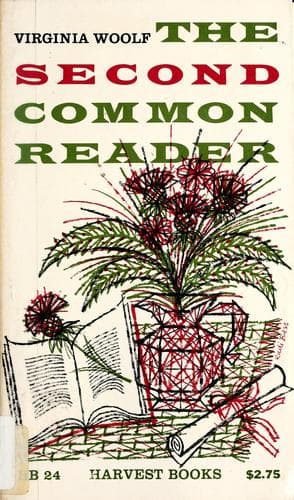
English literature -- History and criticism; Literature, Modern -- History and criticism
Was it a crime? And if so, was it his fault? Did he not start out in the
belief that Christianity had something to do with renunciation and was
not entirely a matter of common sense? If honours and obligations, pomps
and possessions, accumulated and encrusted him, how, being an
Archbishop, could he refuse to accept them? Princesses must have their
soap; palaces must have their furniture; children must have their cows.
And, pathetic though it seems, he never completely lost his interest in
science. He wore a pedometer; he was one of the first to use a camera;
he believed in the future of the typewriter; and in his last years he
tried to mend a broken clock. He was a delightful father too; he wrote
witty, terse, sensible letters; his good stories were much to the point;
and he died in harness. Certainly he was a very able man, but if we
insist upon goodness—is it easy, is it possible, for a good man to be
an Archbishop?
_The Patron and the Crocus_
Young men and women beginning to write are generally given the plausible
but utterly impracticable advice to write what they have to write as
shortly as possible, as clearly as possible, and without other thought
in their minds except to say exactly what is in them. Nobody ever adds
on these occasions the one thing needful: “And be sure you choose your
patron wisely”, though that is the gist of the whole matter. For a book
is always written for somebody to read, and, since the patron is not
merely the paymaster, but also in a very subtle and insidious way the
instigator and inspirer of what is written, it is of the utmost
importance that he should be a desirable man.
Public-domain text, read in full here on John Shaqi.
Reviews
Reviews
No reviews yet
Be the first to share your thoughts on this work.
Elsewhere in the archive
Join the Discussion
Join the discussion
Sign in to leave a comment or review.
Sign InorCreate an account