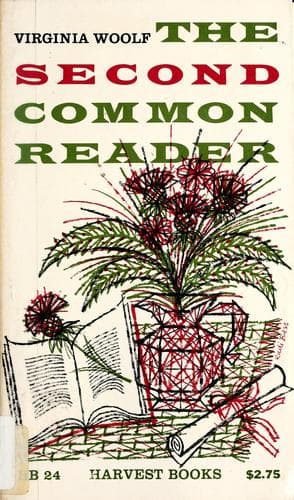
English literature -- History and criticism; Literature, Modern -- History and criticism
goes on to tell us how—
There was a shepherd the other day at Findon Fair who had come from the
east by Lewes with sheep, and who had in his eyes that reminiscence of
horizons which makes the eyes of shepherds and of mountaineers different
from the eyes of other men. . . . I went with him to hear what he had to
say, for shepherds talk quite differently from other men.
Happily this shepherd had little to say, even under the stimulus of the
inevitable mug of beer, about the Unknown Country, for the only remark
that he did make proves him either a minor poet, unfit for the care of
sheep, or Mr. Belloc himself masquerading with a fountain pen. That is
the penalty which the habitual essayist must now be prepared to face. He
must masquerade. He cannot afford the time either to be himself or to be
other people. He must skim the surface of thought and dilute the
strength of personality. He must give us a worn weekly halfpenny instead
of a solid sovereign once a year.
But it is not Mr. Belloc only who has suffered from the prevailing
conditions. The essays which bring the collection to the year 1920 may
not be the best of their authors’ work, but, if we except writers like
Mr. Conrad and Mr. Hudson, who have strayed into essay writing
accidentally, and concentrate upon those who write essays habitually, we
shall find them a good deal affected by the change in their
circumstances. To write weekly, to write daily, to write shortly, to
write for busy people catching trains in the morning or for tired people
coming home in the evening, is a heart-breaking task for men who know
good writing from bad. They do it, but instinctively draw out of harm’s
way anything precious that might be damaged by contact with the public,
or anything sharp that might irritate its skin. And so, if one reads Mr.
Lucas, Mr. Lynd, or Mr. Squire in the bulk, one feels that a common
greyness silvers everything. They are as far removed from the
extravagant beauty of Walter Pater as they are from the intemperate
candour of Leslie Stephen. Beauty and courage are dangerous spirits to
battle in a column and a half; and thought, like a brown paper parcel in
a waistcoat pocket, has a way of spoiling the symmetry of an article. It
is a kind, tired, apathetic world for which they write, and the marvel
is that they never cease to attempt, at least, to write well.
Public-domain text, read in full here on John Shaqi.
Reviews
Reviews
No reviews yet
Be the first to share your thoughts on this work.
Elsewhere in the archive
Join the Discussion
Join the discussion
Sign in to leave a comment or review.
Sign InorCreate an account