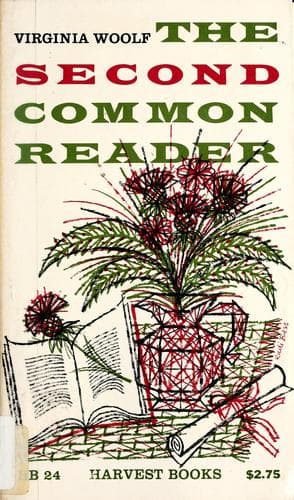
English literature -- History and criticism; Literature, Modern -- History and criticism
For some years, then, it was Marlow who was the dominant partner.
_Nostromo, Chance, The Arrow of Gold_ represent that stage of the
alliance which some will continue to find the richest of all. The human
heart is more intricate than the forest, they will say; it has its
storms; it has its creatures of the night; and if as novelist you wish
to test man in all his relationships, the proper antagonist is man; his
ordeal is in society, not solitude. For them there will always be a
peculiar fascination in the books where the light of those brilliant
eyes falls not only upon the waste of waters but upon the heart in its
perplexity. But it must be admitted that, if Marlow thus advised Conrad
to shift his angle of vision, the advice was bold. For the vision of a
novelist is both complex and specialised; complex, because behind his
characters and apart from them must stand something stable to which he
relates them; specialised because since he is a single person with one
sensibility the aspects of life in which he can believe with conviction
are strictly limited. So delicate a balance is easily disturbed. After
the middle period Conrad never again was able to bring his figures into
perfect relation with their background. He never believed in his later
and more highly sophisticated characters as he had believed in his early
seamen. When he had to indicate their relation to that other unseen
world of novelists, the world of values and convictions, he was far less
sure what those values were. Then, over and over again, a single phrase,
“He steered with care”, coming at the end of a storm, carried in it a
whole morality. But in this more crowded and complicated world such
terse phrases became less and less appropriate. Complex men and women of
many interests and relations would not submit to so summary a judgement;
or, if they did, much that was important in them escaped the verdict.
And yet it was very necessary to Conrad’s genius, with its luxuriant and
romantic power, to have some law by which its creations could be tried.
Essentially—such remained his creed—this world of civilised and
self-conscious people is based upon “a few very simple ideas”; but
where, in the world of thoughts and personal relations, are we to find
them? There are no masts in drawing-rooms; the typhoon does not test the
worth of politicians and business men. Seeking and not finding such
supports, the world of Conrad’s later period has about it an involuntary
obscurity, an inconclusiveness, almost a disillusionment which baffles
and fatigues. We lay hold in the dusk only of the old nobilities and
sonorities: fidelity, compassion, honour, service—beautiful always, but
now a little wearily reiterated, as if times had changed. Perhaps it was
Marlow who was at fault. His habit of mind was a trifle sedentary. He
had sat upon deck too long; splendid in soliloquy, he was less apt in
the give and take of conversation; and those “moments of vision”
Public-domain text, read in full here on John Shaqi.
Reviews
Reviews
No reviews yet
Be the first to share your thoughts on this work.
Elsewhere in the archive
Join the Discussion
Join the discussion
Sign in to leave a comment or review.
Sign InorCreate an account