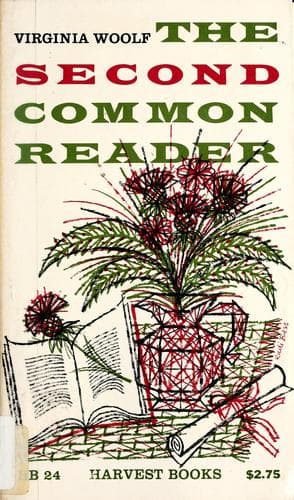
English literature -- History and criticism; Literature, Modern -- History and criticism
Sombrius is one of these sons of sorrow. He thinks himself obliged in
duty to be sad and disconsolate. He looks on a sudden fit of laughter as
a breach of his baptismal vow. An innocent jest startles him like
blasphemy. Tell him of one who is advanced to a title of honour, he
lifts up his hands and eyes; describe a public ceremony, he shakes his
head; shew him a gay equipage, he blesses himself. All the little
ornaments of life are pomps and vanities. Mirth is wanton, and wit
profane. He is scandalized at youth for being lively, and at childhood
for being playful. He sits at a christening, or at a marriage-feast, as
at a funeral; sighs at the conclusion of a merry story, and grows devout
when the rest of the company grow pleasant. After all Sombrius is a
religious man, and would have behaved himself very properly, had he
lived when Christianity was under a general persecution.
The novel is not a development from that model, for the good reason that
no development along these lines is possible. Of its kind such a
portrait is perfect; and when we find, scattered up and down the
_Spectator_ and the _Tatler_, numbers of such little masterpieces with
fancies and anecdotes in the same style, some doubt as to the narrowness
of such a sphere becomes inevitable. The form of the essay admits of its
own particular perfection; and if anything is perfect the exact
dimensions of its perfection become immaterial. One can scarcely settle
whether, on the whole, one prefers a raindrop to the River Thames. When
we have said all that we can say against them—that many are dull,
others superficial, the allegories faded, the piety conventional, the
morality trite—there still remains the fact that the essays of Addison
are perfect essays. Always at the highest point of any art there comes a
moment when everything seems in a conspiracy to help the artist, and his
achievement becomes a natural felicity on his part of which he seems, to
a later age, half-unconscious. So Addison, writing day after day, essay
after essay, knew instinctively and exactly how to do it. Whether it was
a high thing, or whether it was a low thing, whether an epic is more
profound or a lyric more passionate, undoubtedly it is due to Addison
that prose is now prosaic—the medium which makes it possible for people
of ordinary intelligence to communicate their ideas to the world.
Addison is the respectable ancestor of an innumerable progeny. Pick up
the first weekly journal and the article upon the “Delights of Summer”
or the “Approach of Age” will show his influence. But it will also show,
unless the name of Mr. Max Beerbohm, our solitary essayist, is attached
to it, that we have lost the art of writing essays. What with our views
and our virtues, our passions and profundities, the shapely silver drop,
that held the sky in it and so many bright little visions of human life,
is now nothing but a hold—all knobbed with luggage packed in a hurry.
Public-domain text, read in full here on John Shaqi.
Reviews
Reviews
No reviews yet
Be the first to share your thoughts on this work.
Elsewhere in the archive
Join the Discussion
Join the discussion
Sign in to leave a comment or review.
Sign InorCreate an account