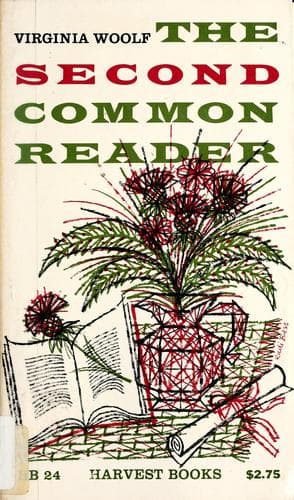
English literature -- History and criticism; Literature, Modern -- History and criticism
Ah, but Eleanor, the Bot and the Hessian have more power over you than
Mr. Edward Ormerod himself. Under the microscope you clearly perceive
that these insects have organs, orifices, excrement; they do, most
emphatically, copulate. Escorted on the one side by the Bos or Warble,
on the other by the Hessian Fly, Miss Ormerod advanced statelily, if
slowly, into the open. Never did her features show more sublime than
when lit up by the candour of her avowal. “This is excrement; these,
though Ritzema Bos is positive to the contrary, are the generative
organs of the male. I’ve proved it.” Upon her head the hood of Edinburgh
most fitly descended; pioneer of purity even more than of Paris Green.
“If you’re sure I’m not in your way,” said Miss Lipscomb unstrapping her
paint box and planting her tripod firmly in the path, “—I’ll try to get
a picture of those lovely hydrangeas against the sky—What flowers you
have in Penzance!”
The market gardener crossed his hands on his hoe, slowly twined a piece
of bass round his finger, looked at the sky, said something about the
sun, also about the prevalence of lady artists, and then, with a nod of
his head, observed sententiously that it was to a lady that he owed
everything he had.
“Ah?” said Miss Lipscomb, flattered, but already much occupied with her
composition.
“A lady with a queer-sounding name,” said Mr. Pascoe, “but that’s the
lady I’ve called my little girl after—I don’t think there’s such
another in Christendom.”
Of course it was Miss Ormerod, equally of course Miss Lipscomb was the
sister of Miss Ormerod’s family doctor; and so she did no sketching that
morning, but left with a handsome bunch of grapes instead—for every
flower had drooped, ruin had stared him in the face—he had written, not
believing one bit what they told him—to the lady with the queer name,
back there came a book “In-ju-ri-ous In-sects,” with the page turned
down, perhaps by her very hand, also a letter which he kept at home
under the clock, but he knew every word by heart, since it was due to
what she said there that he wasn’t a ruined man—and the tears ran down
his face and Miss Lipscomb, clearing a space on the lodging-house table,
wrote the whole story to her brother.
“The prejudice against Paris Green certainly seems to be dying down,”
said Miss Ormerod when she read it.—“But now,” she sighed rather
heavily, being no longer young and much afflicted with the gout, “now
it’s the sparrows.”
One might have thought that _they_ would have left her alone—innocent
dirt-grey birds, taking more than their share of the breakfast crumbs,
otherwise inoffensive. But once you look through a microscope—once you
see the Hessian and the Bot as they really are—there’s no peace for an
elderly lady pacing her terrace on a fine May morning. For example, why,
when there are crumbs enough for all, do only the sparrows get them? Why
not swallows or martins? Why—oh, here come the servants for prayers—
Public-domain text, read in full here on John Shaqi.
Reviews
Reviews
No reviews yet
Be the first to share your thoughts on this work.
Elsewhere in the archive
Join the Discussion
Join the discussion
Sign in to leave a comment or review.
Sign InorCreate an account