India -- History -- British occupation, 1765-1947 -- Fiction; Invalids -- Fiction; Simla (India) -- Fiction
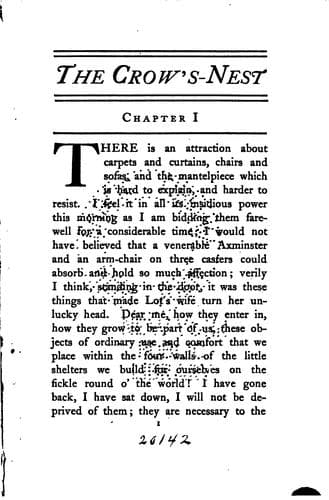
We have entered upon the period of our great glory and content; it is
second summer in these hills, with just a crisp hint of autumn coming.
There is nothing left of the rains but their benediction; all day long
the sun draws the scent out of the deodars and makes false promises to
the garden, where they believe it is spring. The field-daisies and the
hollyhocks and the mignonette are all in second bloom and the broom
down the khud has kindled up again. The person who is really puzzled
is the lilac. We have a lilac bush. I assure you it is not everybody
who can say so in the town of Simla; the lilac is most capricious about
where she will stay and where she won’t stay. We have only one; all her
children either die young or grow up dwarfs. However, after blooming in
the most delicious and heartbreaking manner in April, fainting through
June and going quite distracted in the rains, the lilac now finds new
sap in her veins and the temptation assails her to flower regardless of
the calendar. Yet she doesn’t, poor dear, quite know how; something is
lacking to the consummation of April, and the fictitious joy she grasps
at comes out in ragged little bunches that stick straight up at the end
of the wood of the topmost branches. Nevertheless it is pure lilac,
enough for a button-hole, and matter to boast of, lilac in October.
For all these reasons I was perfectly happy this morning until twenty
minutes past ten o’clock. Atma and I had been transplanting some
cactus dahlias to fill up an empty place. It is a liberty I wouldn’t
have taken at this time of year, but Atma says that he can deceive
the dahlias. “By giving much water,” he explains, “they will take no
notice,” and he has been craftily setting them down in little ponds.
I had a dispute with him about a plant, which he declared was a lily.
To settle the matter, as soon as my back was turned, he dug it up,
and triumphantly sought me. “Behold,” said he, “it has an onion.” He
was distressed to contradict me, but behold it _had_ an onion. The
connection between an onion and a lily was simpler perhaps to Atma
than it would be to many people; but I conceded it. Then came a pedlar
of apples from a neighbouring garden. We shall have apples of our own
in time, but our neighbour down the khud thought of it three or four
years before we did, and there is no particular reason to wait. Our
neighbour’s sturdy retailer squatted discouraged on his haunches before
me. His brown muscles stood out in cords on his arms and legs, his face
was anxious and simple like a child’s. “If your honour will listen,”
said he, “half over Simla I have carried this burden of apples, and it
is no lighter. My words are good and I go always to the verandah, but
the sahib-folk will not buy.”
“And is that,” said I, eyeing the fruit, “a strange thing, worthy one?”
Public-domain text, read in full here on John Shaqi.
Reviews
Reviews
No reviews yet
Be the first to share your thoughts on this work.
Elsewhere in the archive
Join the Discussion
Join the discussion
Sign in to leave a comment or review.
Sign InorCreate an account