India -- History -- British occupation, 1765-1947 -- Fiction; Invalids -- Fiction; Simla (India) -- Fiction
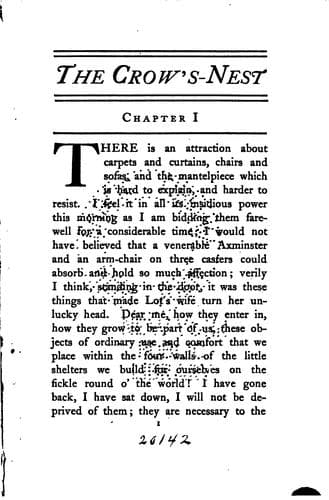
threescore years and ten there would probably always be somebody to
bake them for us and were happy, nevertheless. Then Tryphena came and
stayed an hour, and now I am not so happy as I was.
I would not dwell upon her, I would pass to other themes, but one
has a feeling that Tryphena has been too much omitted from accounts
of our little town. Such chronicles have been somehow too playful;
one would think we did nothing but discover affinities and listen to
the band and eat expensive things in tins. One would think life was
all joy and pleasure whereas there are Associations of every kind.
Whatever may have been the case in the golden age, or the time of
Lord Lytton, I believe that the great over-fed conscience of Great
Britain now sends out more Tryphenas every year, and their good works
have to be seriously reckoned with in considering the possibility
of remaining here. We have our traditions, of course, but we are
practically compelled to live upon them, and it seems to me that a
distant world should hear not only of our declining past but of what we
have increasingly to put up with. I would not have invited Tryphena to
occupy a chapter, but as she has walked in without this formality she
might as well stay.
Indeed I would not have invited her. She is the kind of Tryphena that
never comes to see you unless you are ill. I am not so agreeable when
I am ill--I imagine few people are--and I prefer visits, at such a
time, only from people who are fond of seeing me when I am well. Why in
heaven’s name, when you are feverish or aguish or panting for breath,
you should be expected to accept as a “kindness” a visit from a person
who never thinks of you until you become a helpless object to whet
her righteousness on, who comes and inflicts a personality upon you
to which the most robust health only enables you to be barely polite,
is to me an irritating conundrum. I had taken particular pains to
be reported to Tryphena as entirely convalescent, “quite out of the
doctor’s hands;” I did not want to be on her parish books. Why should
I suffer to enable her to do her duty? Why should she have things put
down to her credit at my expense? This does not seem to me reasonable
or proper and I am averse to it. Yet I have told her, such is my
hypocrisy, how good it was of her to come, and she has gone away
better pleased with herself than ever.
Public-domain text, read in full here on John Shaqi.
Reviews
Reviews
No reviews yet
Be the first to share your thoughts on this work.
Elsewhere in the archive
Join the Discussion
Join the discussion
Sign in to leave a comment or review.
Sign InorCreate an account