India -- History -- British occupation, 1765-1947 -- Fiction; Invalids -- Fiction; Simla (India) -- Fiction
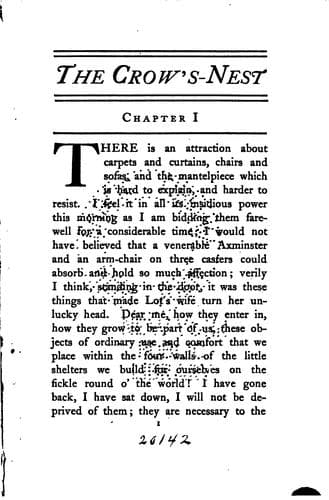
We always thought, she and I, that we should more or less take to one
another. Mutual friends told us so, and there was evidence to support
the statement. We approved what they carried back and forth between us
of our respective habits and opinions; and once I saw a scrap of her
interesting handwriting conveying a view in terms very net. Constantly
we were made to feel that upon the basis of human intercourse--the
delicate terms of which who can quite expose?--we had things to give
each other, and constantly we said with intention, “Next summer I must
really manage to meet her.” That is all I knew of Cousin Christina,
except that life had offered her, somehow, less than she had a title
to, and that she spent a great deal of time in her garden.
And then--“on sait trop de cela, que les heures sont comptées à
l’homme qui doit mourir, et on agit comme si le trésor de ces heures
était inépuisable, l’occasion indéfiniment renouvable et nos amis
éternels.”[5] Cousin Christina died last year, and we had never met.
It will be judged how much I value her visits now, now that she has
so far to come, and her efforts to make me understand; we who remain
are so deaf. There were many points at which the world irritated her
while she was conditioned in it; and I think the remoteness of this
place appeals to her in her freedom; she is pleased in its great lines
and vast spaces which yet hold just the touch of human enterprise and
affection which she too thought essential, here in my garden. She
seems, at all events, to belong to the vague, as if she loved it, and
of course I can never lay my hand on her.
She is devoted to the garden, constantly she trails about it, having
nothing to say to me, with precisely that attitude toward a rose and
that hand under a top-heavy aster which separates the true lover from
the mere admirer. Dahlias swing free as she passes, and leaves that
keep the sun off the convolvuluses get out of their way. It is not the
wind, it is Cousin Christina. She is more intimate with the flowers
than I; almost invariably, when I show her anything new in bloom she
informs me “I saw that yesterday.” She does not seem to think it a
liberty to see another person’s flowers before the person herself. I
criticise her there.
Public-domain text, read in full here on John Shaqi.
Reviews
Reviews
No reviews yet
Be the first to share your thoughts on this work.
Elsewhere in the archive
Join the Discussion
Join the discussion
Sign in to leave a comment or review.
Sign InorCreate an account