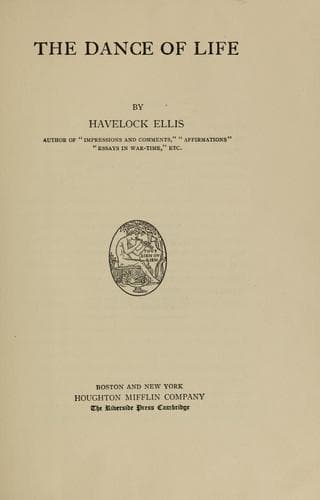
Conduct of life; English essays -- 20th century; Ethics; Philosophy
Morality, Greek, an artistic balance of light and shade, 260;
a matter of taste, 263;
the æsthetic quality of, evidenced by language, 263, 264;
Shaftesbury’s views on, 264-66;
the influence of Shaftesbury on our modern, 266, 267;
imagination in, 272;
instinctive, according to Hutcheson, 274;
conception of, as an art, does not lack seriousness, 276;
the æsthetic view of, advocated by Catholics, 276 _n._;
the æsthetic view of, repugnant to two classes of minds, 280-82;
indefiniteness of criterion of, an advantage, 282, 283;
justification of æsthetic conception of, 283, 284;
flexible and inflexible, illustrated by Jesuits and Pascal, 303-05;
art the reality of, 314;
æsthetic, of the Greeks, 316-18;
the antinomy between morals and, 319;
a restraint placed upon the possessive instinct, 338-40;
to be replaced by æsthetic instinct, 340, 341;
æsthetic instinct has the character of, 346.
Morals, dancing as, 61, 63, 66;
books on, 244;
defined, 245;
means _custom_, 245;
Plotinus’s conception of, 250-52;
as art, views of the Greeks and the Romans on, differ, 252;
Hebrews never conceived of the art of, 253;
as art, modern conception of, 253;
the modern feeling about, is Jewish and Roman, 253;
Kant’s idea of the art of, 253, 254;
formed by instinct, tradition and reason, 254-59;
Greek, have come to modern world through Shaftesbury, 267;
the æsthetic attitude possible for spectator of, 270;
art and æsthetics to be kept apart in, 314, 315, 325-28;
a species of the genus art, 316;
the antinomy between morality and, 319;
philosophers have failed to see that it is an art, 324.
_Morisco_, the, 49 _n._
Mozart, Wolfgang, his interest in dancing, 62.
Müller-Freienfels, Richard, two kinds of æsthetic contemplation defined
by, 331.
Multatuli, quoted on the source of curiosity, 112.
Music, and ceremony, 24-26;
and acting, and poetry, 36;
and singing, and dancing, their relation, 62;
a science or art, 68;
discovery of Pythagoras in, 74;
philosophy the noblest and best, 81 _n._;
the most abstract, the most nearly mathematical of the arts, 135;
of style, 163, 164;
of philosophy and religion, 179.
Musical forms, evolved from similar dances, 62.
Musical instruments, 53, 54.
Musset, Alfred de, his _Confession d’un Enfant du Siècle_, 144.
Mysteries, the Eleusinian, 240-43.
Mystic, the genuine, 202;
Lao-tze, the earliest great, 204.
Mystics, the great, 236, 237.
Public-domain text, read in full here on John Shaqi.
Reviews
Reviews
No reviews yet
Be the first to share your thoughts on this work.
Elsewhere in the archive
Join the Discussion
Join the discussion
Sign in to leave a comment or review.
Sign InorCreate an account