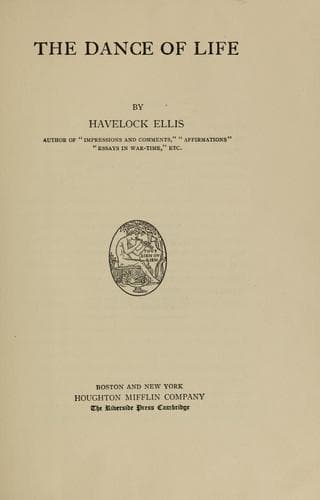
Conduct of life; English essays -- 20th century; Ethics; Philosophy
Always, it may perhaps be noted in passing, it seems to have been
difficult for the sober and solemn Northerner, especially of England,
to enter into the Greek spirit, all the more since that spirit was
only the spirit of a sprinkling of people amid a hostile mass about as
unlike anything we conventionally call “Greek” as could well be
imagined, so that, as Élie Faure, the historian of art, has lately
remarked, Greek art is a biological “monstrosity.” (Yet, I would ask,
might we not say the same of France or of England?) That is why it is
usually so irritating to read books written about the Greeks by
barbarians; they slur over or ignore what they do not like and, one
suspects, they instinctively misinterpret what they think they do
like. Better even the most imperfect knowledge of a few original
texts, better even only a few days on the Acropolis, than the
second-hand opinions of other people. And if we must have a book about
the Greeks, there is always Athenæus, much nearer to them in time and
in spirit, with all his gossip, than any Northern barbarian, and an
everlasting delight.
Footnote 33:
Along another line it should have been clear that the dialogues of the
philosophers were drama and not history. It would appear (Croiset,
_Littérature Grecque_, vol. III, pp. 448 _et seq._) that with
Epicharmus of Cos, who was settled in Megara at the beginning of the
fifth century, philosophic comedy flourished brilliantly at Syracuse,
and indeed fragments of his formal philosophic dialogue survive. Thus
it is suggested that Athenian comedy and sophistic prose dialogues may
be regarded as two branches drawn from the ancient prototype of such
Syracusan comedy, itself ultimately derived from Ionian philosophy. It
is worth noting, I might add, that when we first hear of the Platonic
dialogues they were being grouped in trilogies and tetralogies like
the Greek dramas; that indicates, at all events, what their earliest
editors thought about them. It is also interesting to note that the
writer of, at the present moment, the latest handbook to Plato,
Professor A. E. Taylor (_Plato_, 1922, pp. 32-33), regards the
“Socrates” of Plato as no historical figure, not even a mask of Plato
himself, but simply “the hero of the Platonic drama,” of which we have
to approach in much the same way as the work of “a great dramatist or
novelist.”
Footnote 34:
He had often been bidden in dreams to make music, said the Platonic
Socrates in _Phædo_, and he had imagined that that was meant to
encourage him in the pursuit of philosophy, “which is the noblest and
best of music.”
Footnote 35:
In discussing Socrates I have made some use of Professor Dupréel’s
remarkable book, _La Légende Socratique_ (1922). Dupréel himself, with
a little touch of irony, recommends a careful perusal of the beautiful
and monumental works erected by Zeller and Grote and Gomperz to the
honour of Socrates.
Public-domain text, read in full here on John Shaqi.
Reviews
Reviews
No reviews yet
Be the first to share your thoughts on this work.
Elsewhere in the archive
Join the Discussion
Join the discussion
Sign in to leave a comment or review.
Sign InorCreate an account