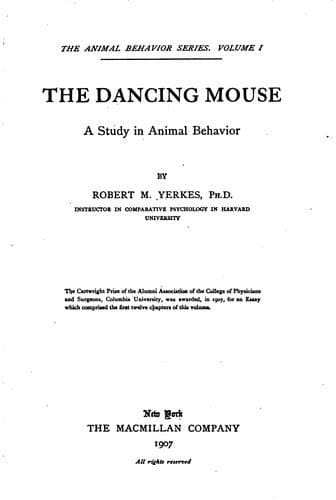
The Dancing Mouse: A Study in Animal BehaviorYerkes, Robert Mearns
Science
The Dancing Mouse: A Study in Animal Behavior
Yerkes, Robert Mearns
Animal behavior; Dancing mice
1 5 5 5.0 5 5 5.0 5.00
2 5 4 4.5 2 2 2.0 3.25
3 4 5 4.5 2 5 3.5 4.00
4 3 4 3.5 1 1 1.0 2.25
5 5 2 3.5 0 1 0.5 2.00
6 3 2 2.5 1 0 0.5 1.50
7 2 1 1.5 1 2 1.5 1.50
8 5 1 3.0 0 0 0 1.50
9 1 3 2.0 0 0 0 1.00
10 1 2 1.5 1 0 0.5 1.00
11 1 1 1.0 0 0 0.50
12 1 1 1.0 0 0 0.50
13 0 0 0 0 0 0
14 0 0 0 0
15 0 0 0 0
[Illustration: FIGURE 33.--Plasticity curves. In the left margin are given
the indices of modifiability (the number of tests necessary for the
establishment of a perfect habit). Below the base line the age of the
individuals is given in months. Curve for males, --------; curve for
females, - - - -; curve for both males and females,----. When these three
plasticity curves are completed, they will represent the indices of
modifiability as determined for ten individuals at the age of 1 month, and
similarly for the same number of individuals at each of the ages, 4, 7,
10, 13, 16, and 19 months.]
The detailed results for the one-month old individuals appear in Table 43;
those for the four-month individuals in Table 52. The general averages for
the former are to be found in the third column of Table 46, under the
heading "10 tests per day"; those for the latter in the last column of
Table 52. Mere inspection of these tables reveals the curious sex
difference which goes far towards justifying the presentation of this
uncompleted work. The index of modifiability for the ten one-month
individuals is 88 (that is, 88 tests were necessary for the establishment
of a habit); for the four-month individuals it is 102.5. The heavy solid
line of Figure 33 joins the points on the ordinates at which these values
are located. Apparently, then, the dancer acquires the white-black
discrimination habit less readily at the age of four months than at the
age of one month.
Public-domain text, read in full here on John Shaqi.
Reviews
Reviews
No reviews yet
Be the first to share your thoughts on this work.
Elsewhere in the archive
Join the Discussion
Join the discussion
Sign in to leave a comment or review.
Sign InorCreate an account