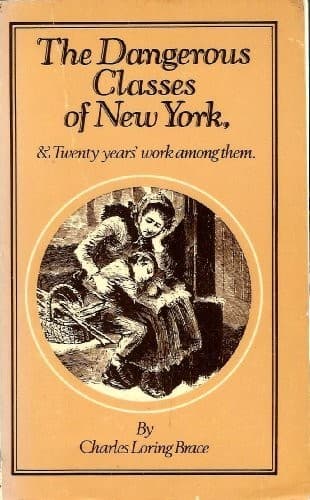
The Dangerous Classes of New York, and Twenty Years' Work Among ThemBrace, Charles Loring
History
The Dangerous Classes of New York, and Twenty Years' Work Among Them
Brace, Charles Loring
Child welfare -- New York (State) -- New York; New York (N.Y.) -- Social conditions; Poor -- New York (State) -- New York
If the directors of a benevolent institution or enterprise can arouse
these great motives in their agents,--spiritual enthusiasm with a
reasonable gratification of the love of honor and a hope of fair
compensation,--they will undoubtedly create a body of workers capable of
producing a profound impression on the evils they seek to remove.
It is always a misfortune for an agent of a charity if he be too
constantly with the objects of his benevolent labors. He either becomes
too much accustomed to their misfortunes, and falls into a spirit of
routine with them; or, if of tender sympathies, the spring of his mind
is bent by such a constant burden of misery, and he loses the best
qualities for his work--elasticity and hope. Every efficient worker in
the field of benevolence should have time and place for solitude, and
for other pursuits or amusements.
DUTIES OF TRUSTEES.
A board of trustees for an important charity should represent, so far as
is practicable, the different classes and professions of society. There
is danger in a board being too wealthy or distinguished, as well as too
humble. First of all, men are needed who have a deep moral interest in
the work, and who will take a practical part in it. Then they must be
men of such high character and integrity that the community will feel no
anxiety at committing to them--"trust funds." As few "figure-heads"
should be taken in as possible--that is, persons of eminent names, for
the mere purpose of making an impression on the public. Men of wealth
are needed for a thousand emergencies; men of moderate means, also, who
can appreciate practical difficulties peculiar to this class; men of
brains, to guide and suggest, and of action, to impel. There should be
lawyers in such a board, for many cases of legal difficulty which arise;
and, if possible, physicians, as charities have so much to do with
sanitary questions. Two classes only had better not be admitted: men of
very large wealth, as they seldom contribute more than persons of
moderate property, and discourage others by their presence in the board;
and clergymen with parishes, the objection to the latter being that they
have no time for such labors, and give a sectarian air to the charity.
It is exceedingly desirable that the trustees or managers of our
benevolent institutions should take a more active and personal part in
their management. The peculiar experience which a successful business
career gives--the power both of handling details and managing large
interests; the capacity of organization; the energy and the careful
judgment and knowledge of men which such a life develops,--are the
qualities most needed in managing moral and benevolent "causes."
Public-domain text, read in full here on John Shaqi.
Reviews
Reviews
No reviews yet
Be the first to share your thoughts on this work.
Elsewhere in the archive
Join the Discussion
Join the discussion
Sign in to leave a comment or review.
Sign InorCreate an account