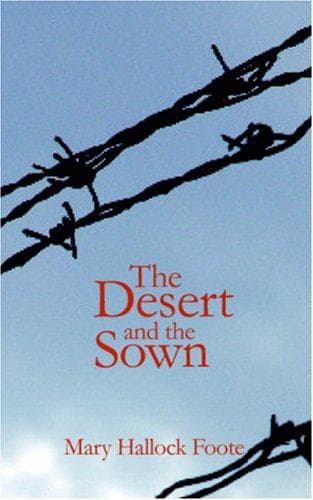
New York (State) -- Fiction; West (U.S.) -- Fiction
All his mother's friends liked Paul and supposed him to be very clever,
but they had never taken him seriously. “Now, at last,” they said, “he
has done something like other people. He is coming out.” Experienced
matrons were pleased to flatter him on his choice of a bride. The
daughters studied Moya, and decided that she was “different,” but “all
right.” She had a careless distinction of her own. Some of her “things”
were surprisingly lovely--probably heirlooms; and army women are so
clever about clothes.
Would they spend the winter in town?
Paul replied absently: they had not decided. Probably they would not go
down till after the holidays.
What an attractive plan? What an ideal family Christmas they would have
all together in the country! Christine had not been up all summer,
had she? Here Moya came to her husband's relief, through a wife's dual
consciousness in company, and covered his want of spirits with a flood
of foolish chatter.
The smiling way in which women the most sincere can posture and prance
on the brink of dissimulation was particularly sickening to Paul at this
time. Why need they put themselves in situations where it was required?
The situations were of his mother's creation. He imagined she must
suffer, but had little sympathy with that side of her martyrdom. Moya
seemed a trifle feverish in her acceptance of these affairs of which
she was naturally the life and centre. A day of entertaining often faded
into an evening of subtle sadness.
Paul would take her out into the moonlight of that deep inland country.
The trees were dark with leaves and brooded close above them; old
water-fences and milldams cast inky shadows on the still, shallow ponds
clasped in wooded hills. No region could have offered a more striking
contrast to the empty plains. Moya felt shut in with old histories. The
very ground was but moulding sand in which generations of human lives
had been poured, and the sand swept over to be reshaped for them.
“We are not living our own life yet,” Paul would say; not adding, “We
are protecting her.” Here was the beginning of punishment helplessly
meted out to this proud woman whose sole desire was towards her
children--to give, and not to receive.
“But this is our Garden?” Moya would muse. “We are as nearly two alone
as any two could be.”
“If you include the Snake. We can't leave out the Snake, you know.”
“Snake or Seraph--I don't believe I know the difference. Paul, I cannot
have you thinking things.”
“I?--what do I think?”
“You are thinking it is bad for me to be so much with her. You, as a man
and a husband, resent what she, as a woman and a wife, has dared to do.
And I, as another woman and wife, I say she could do nothing else and be
true. For, don't you see? She never loved him. The wifehood in her has
never been reached. She was a girl, then a mother, then a widow. How
could she”--
Public-domain text, read in full here on John Shaqi.
Reviews
Reviews
No reviews yet
Be the first to share your thoughts on this work.
Elsewhere in the archive
Join the Discussion
Join the discussion
Sign in to leave a comment or review.
Sign InorCreate an account