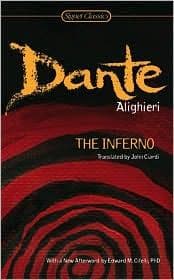
The Divine Comedy of Dante Alighieri: The InfernoDante Alighieri
ReligionJewish
The Divine Comedy of Dante Alighieri: The Inferno
Dante Alighieri
Epic poetry, Italian -- Translations into English; Hell; Italian poetry -- To 1400 -- Translations into English
[422] _My lay_: See previous note. Dante thus indirectly acknowledges
his debt to Virgil; and, perhaps, at the same time puts in his claim to
an imaginative licence equal to that taken by his master. On a modern
reader the effect of the reference is to weaken the verisimilitude of
the incident.
[423] _For I am he, etc._: The speaker is Pier delle Vigne, who from
being a begging student of Bologna rose to be the Chancellor of the
Emperor Frederick II., the chief councillor of that monarch, and one of
the brightest ornaments of his intellectual court. Peter was perhaps the
more endeared to his master because, like him, he was a poet of no mean
order. There are two accounts of what caused his disgrace. According to
one of these he was found to have betrayed Frederick's interests in
favour of the Pope's; and according to the other he tried to poison him.
Neither is it known whether he committed suicide; though he is said to
have done so after being disgraced, by dashing his brains out against a
church wall in Pisa. Dante clearly follows this legend. The whole
episode is eloquent of the esteem in which Peter's memory was held by
Dante. His name is not mentioned in Inferno, but yet the promise is
amply kept that it shall flourish on earth again, freed from unmerited
disgrace. He died about 1249.
[424] _The harlot_: Envy.
[425] _Of what thou thinkest, etc._: Virgil never asks a question for
his own satisfaction. He knows who the spirits are, what brought them
there, and which of them will speak honestly out on the promise of
having his fame refreshed in the world. It should be noted how, by a
hint, he has made Peter aware of who he is (line 48); a delicate
attention yielded to no other shade in the Inferno, except Ulysses
(_Inf._ xxvi. 79), and, perhaps, Brunetto Latini (_Inf._ xv. 99).
[426] _In them shall ne'er be clad_: Boccaccio is here at great pains to
save Dante from a charge of contradicting the tenet of the resurrection
of the flesh.
[427] _Naked_: These are the prodigals; their nakedness representing the
state to which in life they had reduced themselves.
[428] _Lano_: Who made one of a club of prodigals in Siena (_Inf._ xxix.
130) and soon ran through his fortune. Joining in a Florentine
expedition in 1288 against Arezzo, he refused to escape from a defeat
encountered by his side at Pieve del Toppo, preferring, as was supposed,
to end his life at once rather than drag it out in poverty.
[429] _James of St. Andrews_: Jacopo da Sant' Andrea, a Paduan who
inherited enormous wealth which did not last him for long. He literally
threw money away, and would burn a house for the sake of the blaze. His
death has been placed in 1239.
Public-domain text, read in full here on John Shaqi.
Reviews
Reviews
No reviews yet
Be the first to share your thoughts on this work.
Elsewhere in the archive
Join the Discussion
Join the discussion
Sign in to leave a comment or review.
Sign InorCreate an account