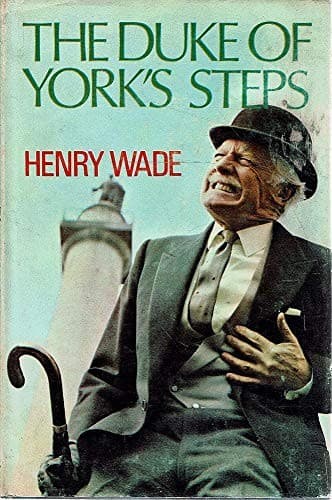
Detective and mystery stories; Police -- Great Britain -- Fiction
The two trails that Poole was now following—excluding, for the moment,
Ryland Fratten—had diverged; one remained in London, the other led to
Belgium—Brussels. He had to decide which to follow himself and which
to allot to an assistant. His inclination was to give Lessingham the
place of honour, but if he were to go off to Brussels now he would be
out of touch with events in London—and he had a feeling that events
would soon become more rapid. It was possible, too, that though
Lessingham’s trail led to Brussels, he himself might still be in
London. Poole decided, therefore, to send Sergeant Gower to the
address in the Rue de Canetons, whilst he himself investigated the
alibis so kindly provided for him by Captain and Mrs. Wraile.
Returning to Scotland Yard, he sent for Sergeant Gower and told him to
look up the train and air services to the Belgian capital and to be
ready to catch whatever would get him there quickest. Gower, who had
the reputation of being a walking Bradshaw, replied at once that there
was an 8.30 p. m. train from Liverpool Street to Harwich which would
get him to Brussels some time after 9 a. m. the following morning. As
it was not barely six there would be no difficulty about catching it;
what were his instructions? The question at once brought Poole to a
realization of the difficulty that confronted him. It was easy enough
to say: find Lessingham; but, if found, what was to be done with him?
It was not, as yet, a question of arrest; when that time came the
Belgian police might have to be called in. It was rather a question of
interrogation and Poole wanted to do that himself. For the moment,
therefore, he instructed Sergeant Gower to investigate the address; if
possible get in touch with Lessingham, and then telephone to him,
Poole, for further instructions. He gave certain definite hours at
which he would try to be on the end of the telephone at Scotland Yard.
When Gower had gone, Poole took a sheet of foolscap and started to
work on the Wraile alibis. Assuming for the moment that Mrs. Wraile
was the driver of the car, and Wraile the man who had first jostled
and then shot Sir Garth, he jotted down the times within which each of
them must have been away from their alibi. Reviewing all the evidence
as to time, it seemed fairly certain that the accident on the Duke of
York’s Steps had taken place at 6.30 p. m., the death a few minutes
later. With that assumption the time-table worked out as follows:
Public-domain text, read in full here on John Shaqi.
Reviews
Reviews
No reviews yet
Be the first to share your thoughts on this work.
Elsewhere in the archive
Join the Discussion
Join the discussion
Sign in to leave a comment or review.
Sign InorCreate an account