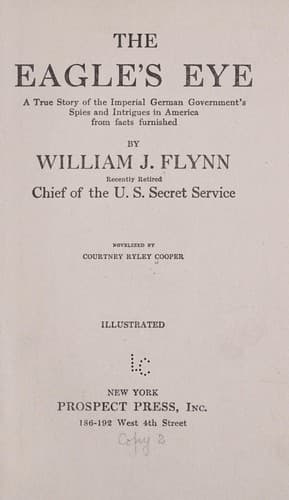
Espionage, German -- United States -- Fiction; Germans -- United States -- Fiction; Spy stories
Complaints against conditions were usually proved groundless by the
Secret Service. In cases where the workingmen were not receiving fair
treatment, a word to the owner was usually sufficient to correct
the trouble, for the manufacturers had combined with the workers in
preventing Germany from being successful in its plotting. The ideal
positions which existed at distant points were proved to be phantoms.
The Hun-inspired stories of dangers existing through the handling of
various substances were denied by authoritative sources which could
leave no doubt in the mind of the families of the workers. This was the
work which the Secret Service had been doing in conjunction with labor
since the attempt to foment the longshoremen's strike had been baffled.
Harrison Grant, president of the Criminology Club, and Dixie Mason, the
pretty little Secret Service operative, had often discussed reports of
these activities of German agents. Von Bernstorff, and his aides, had
followed the traditional course in each effort, using members of the
Kaiser's spy army in America to do the actual work of enticement or
intimidation. Then this department of activity against America by the
Huns suddenly stopped. Agents of the Kaiser no longer sought membership
in unions, control of labor papers was relinquished by Dr. Heinrich
Albert, the paymaster of the spy army, and it seemed that Germany had
admitted defeat through the loyalty of American workingmen.
But neither Grant nor Dixie were deceived. Through the wireless in
the Criminology Club, and through phonographic attachments at other
stations confidential messages between the Wilhelmstrasse and the
Imperial German Embassy in Washington were picked out of the air and
later the secrets of the coded messages were deciphered. Through
these Grant and Dixie knew that Germany's demands for successful
demoralization of American labor had become more and more insistent
as efforts of the spy army met with failure after failure. Then the
demands suddenly ceased without any apparent reason and the president
of the Criminology Club and the young Secret Service operative, through
their intimate knowledge of Hun methods, felt that Von Bernstorff had
sent a written report to Berlin of some plot which promised success if
time were given for its prosecution and fulfillment.
So no vigilance was relaxed. The labor committees were warned against
falling into a false feeling of security because of the apparent
inactivity of Imperial Germany. Many months of watchful waiting
followed, and then came the first rumbling of a storm which threatened
the whole existence of labor, a storm which actually accomplished the
destruction of millions of dollars worth of wheat and other cereal
supplies.
Public-domain text, read in full here on John Shaqi.
Reviews
Reviews
No reviews yet
Be the first to share your thoughts on this work.
Elsewhere in the archive
Join the Discussion
Join the discussion
Sign in to leave a comment or review.
Sign InorCreate an account