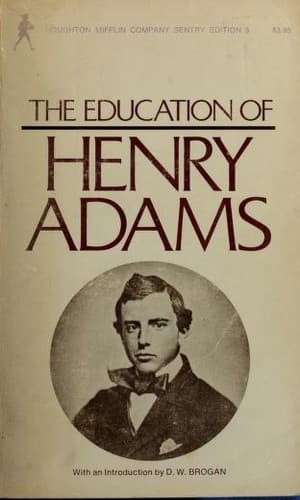
Adams, Henry, 1838-1918; Historians -- United States -- Biography
Legation, and lost the chance to make its satire fatal; but he
instantly learned the narrowness of his escape from old Joe Parkes, one
of the traditional busy-bodies of politics, who had haunted London
since 1830, and who, after rushing to the Times office, to tell them
all they did not know about Henry Adams, rushed to the Legation to tell
Adams all he did not want to know about the Times. For a moment Adams
thought his "usefulness" at an end in other respects than in the press,
but a day or two more taught him the value of obscurity. He was totally
unknown; he had not even a club; London was empty; no one thought twice
about the Times article; no one except Joe Parkes ever spoke of it; and
the world had other persons--such as President Lincoln, Secretary
Seward, and Commodore Wilkes--for constant and favorite objects of
ridicule. Henry Adams escaped, but he never tried to be useful again.
The Trent Affair dwarfed individual effort. His education at least had
reached the point of seeing its own proportions. "Surtout point de
zele!" Zeal was too hazardous a profession for a Minister's son to
pursue, as a volunteer manipulator, among Trent Affairs and rebel
cruisers. He wrote no more letters and meddled with no more newspapers,
but he was still young, and felt unkindly towards the editor of the
London Times.
Mr. Delane lost few opportunities of embittering him, and he
felt little or no hope of repaying these attentions; but the Trent
Affair passed like a snowstorm, leaving the Legation, to its surprise,
still in place. Although the private secretary saw in this delay--which
he attributed to Mr. Seward's good sense--no reason for changing his
opinion about the views of the British Government, he had no choice but
to sit down again at his table, and go on copying papers, filing
letters, and reading newspaper accounts of the incapacity of Mr.
Lincoln and the brutality of Mr. Seward--or vice versa. The heavy
months dragged on and winter slowly turned to spring without improving
his position or spirits. Socially he had but one relief; and, to the
end of life, he never forgot the keen gratitude he owed for it. During
this tedious winter and for many months afterwards, the only gleams of
sunshine were on the days he passed at Walton-on-Thames as the guest of
Mr. and Mrs. Russell Sturgis at Mount Felix.
Public-domain text, read in full here on John Shaqi.
Reviews
Reviews
No reviews yet
Be the first to share your thoughts on this work.
Elsewhere in the archive
Join the Discussion
Join the discussion
Sign in to leave a comment or review.
Sign InorCreate an account