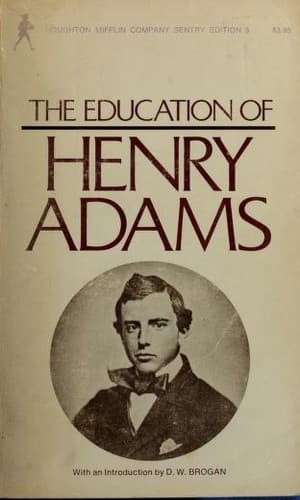
Adams, Henry, 1838-1918; Historians -- United States -- Biography
By chance it happened that Adam Badeau took the lower suite of
rooms at Dohna's, and, as it was convenient to have one table, the two
men dined together and became intimate. Badeau was exceedingly social,
though not in appearance imposing. He was stout; his face was red, and
his habits were regularly irregular; but he was very intelligent, a
good newspaper-man, and an excellent military historian. His life of
Grant was no ordinary book. Unlike most newspaper-men, he was a
friendly critic of Grant, as suited an officer who had been on the
General's staff. As a rule, the newspaper correspondents in Washington
were unfriendly, and the lobby sceptical. From that side one heard
tales that made one's hair stand on end, and the old West Point army
officers were no more flattering. All described him as vicious, narrow,
dull, and vindictive. Badeau, who had come to Washington for a
consulate which was slow to reach him, resorted more or less to whiskey
for encouragement, and became irritable, besides being loquacious. He
talked much about Grant, and showed a certain artistic feeling for
analysis of character, as a true literary critic would naturally do.
Loyal to Grant, and still more so to Mrs. Grant, who acted as his
patroness, he said nothing, even when far gone, that was offensive
about either, but he held that no one except himself and Rawlins
understood the General. To him, Grant appeared as an intermittent
energy, immensely powerful when awake, but passive and plastic in
repose. He said that neither he nor the rest of the staff knew why
Grant succeeded; they believed in him because of his success. For
stretches of time, his mind seemed torpid. Rawlins and the others would
systematically talk their ideas into it, for weeks, not directly, but
by discussion among themselves, in his presence. In the end, he would
announce the idea as his own, without seeming conscious of the
discussion; and would give the orders to carry it out with all the
energy that belonged to his nature. They could never measure his
character or be sure when he would act. They could never follow a
mental process in his thought. They were not sure that he did think.
In all this, Adams took deep interest, for although he was not,
like Badeau, waiting for Mrs. Grant's power of suggestion to act on the
General's mind in order to germinate in a consulate or a legation, his
portrait gallery of great men was becoming large, and it amused him to
add an authentic likeness of the greatest general the world had seen
since Napoleon. Badeau's analysis was rather delicate; infinitely
superior to that of Sam Ward or Charles Nordhoff.
Public-domain text, read in full here on John Shaqi.
Reviews
Reviews
No reviews yet
Be the first to share your thoughts on this work.
Elsewhere in the archive
Join the Discussion
Join the discussion
Sign in to leave a comment or review.
Sign InorCreate an account