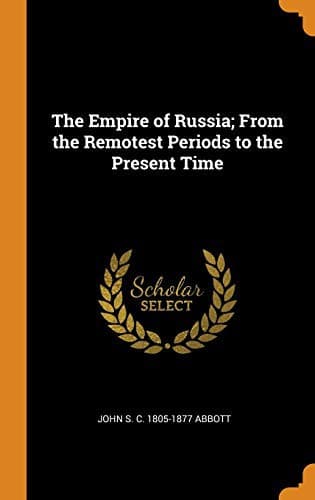
The Empire of Russia: From the Remotest Periods to the Present TimeAbbott, John S. C. (John Stevens Cabot)
History
The Empire of Russia: From the Remotest Periods to the Present Time
Abbott, John S. C. (John Stevens Cabot)
Russia -- History
Ivan III., continually occupied in extending, consolidating and
developing the resources of his vast empire, could not but look with
jealousy upon the encroachments of the Turks, who had already overrun
all Greece, who had taken a large part of Hungary, and who were
surging up the Danube in wave after wave of terrible invasion. Still,
sound judgment taught him that the hour had not yet come for him to
interpose; that it was his present policy to devote all his energies
to the increase of Russian wealth and power. It was a matter of the
first importance that Russia should enjoy the privileges of commerce
with those cities of Greece now occupied by the Turks, to which Russia
had access through the Dnieper and the Don, and partially through the
vast floods of the Volga. But the Russian merchants were incessantly
annoyed by the oppression of the lawless Turks. The following letter
from Ivan III. to the Sultan Bajazet II., gives one a very clear idea
of the relations existing between the two countries at that time. It
is dated Moscow, August 31st, 1492.
"To Bajazet, Sultan, King of the princes of Turkey, Sovereign of the
earth and of the sea, we, Ivan III., by the grace of God, only true
and hereditary monarch of all the Russias, and of many other countries
of the North and of the East; behold! that which we deem it our duty
to write to your majesty. We have never sent embassadors to each other
with friendly greetings. Nevertheless, the Russian merchants have
traversed your estates in the exercise of a traffic advantageous to
both of our empires. Often they complain to me of the vexations they
encounter from your magistrates, but I have kept silence. The last
summer, the pacha of Azof forced them to dig a ditch, and to carry
stones for the construction of the edifices of the city; more than
this, they have compelled our merchants of Azof and of Caffa to
dispose of their merchandise for one half their value. If any one of
the merchants happens to fall sick, the magistrates place seals upon
the goods of all, and, if he dies, the State seizes all these goods,
and restores but half if he recover. No regard is paid to the clauses
of a will, the Turkish magistrates recognizing no heirs but themselves
to the property of the Russians.
"Such glaring injustice has compelled me to forbid my merchants to
engage in traffic in your country. From whence come these acts of
violence? Formerly these merchants paid only the legal tax, and they
were permitted to trade without annoyance. Are you aware of this, or
not? One word more. Mahomet II., your father, was a prince of grandeur
and renown. He wished, it is reported, to send to us embassadors,
proposing friendly relations. Providence frustrated the execution of
this project. But why should we not now see the accomplishment of this
plan? We await your response."
Public-domain text, read in full here on John Shaqi.
Reviews
Reviews
No reviews yet
Be the first to share your thoughts on this work.
Elsewhere in the archive
Join the Discussion
Join the discussion
Sign in to leave a comment or review.
Sign InorCreate an account