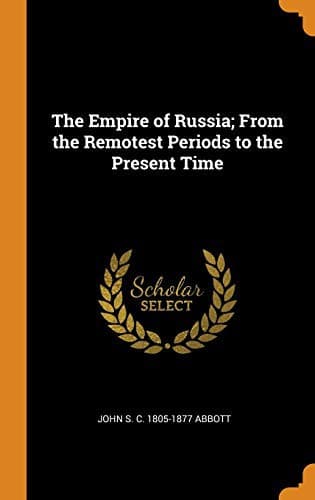
The Empire of Russia: From the Remotest Periods to the Present TimeAbbott, John S. C. (John Stevens Cabot)
History
The Empire of Russia: From the Remotest Periods to the Present Time
Abbott, John S. C. (John Stevens Cabot)
Russia -- History
As soon as the strelitzes in Moscow, numbering many thousands, heard
of the assassination of their general and of their comrades, they flew
to arms, and in solid battalions, with infantry, artillery and
cavalry, marched to the assault of the convent. The regent rallied her
supporters, consisting of the lords who were her partisans, and their
vassals, and prepared for a vigorous defense. Russia seemed now upon
the eve of a bloody civil war. The nobles generally espoused the cause
of the tzars under the regency of Sophia. Their claims seemed those of
legitimacy, while the success of the insurrectionary soldiers promised
only anarchy. The rise of the people in defense of the government was
so sudden and simultaneous, that the strelitzes were panic-stricken,
and soon, in the most abject submission, implored pardon, which was
wisely granted them. Sophia, with the tzars, surrounded by an army,
returned in triumph to Moscow. Tranquillity was thus restored.
Sophia still held the reins of power with a firm grasp. The imbecility
of Ivan and the youth of Peter rendered this usurpation easy. Very
adroitly she sent the most mutinous regiments of the strelitzes on
apparently honorable missions to the distant provinces of the Ukraine,
Kesan, and Siberia. Poland, menaced by the Turks, made peace with
Russia, and purchased her alliance by the surrender of the vast
province of Smolensk and all the conquered territory in the Ukraine.
In the year 1687, Sophia sent the first Russian embassy to France,
which was then in the meridian of her splendor, under the reign of
Louis XIV. Voltaire states that France, at that time, was so
unacquainted with Russia, that the Academy of Inscriptions celebrated
this embassy by a medal, as if it had come from India.[10] The Crimean
Tartars, in confederacy with the Turks, kept Russia, Poland, Hungary,
Transylvania, and the various provinces of the German empire in
perpetual alarm. Poland and Russia were so humiliated, that for
several years they had purchased exemption from these barbaric forays
by paying the Tartars an annual tribute amounting to fifty thousand
dollars each. Sophia, anxious to wipe out this disgrace, renewed the
effort, which had so often failed, to unite all Europe against the
Turks. Immense armies were raised by Russia and Poland and sent to the
Tauride. For two years a bloody war raged with about equal slaughter
upon both sides, while neither party gained any marked advantage.
[Footnote 10: "La France n'avait eu encore aucune correspondance avec
la Russie; on ne le connaissait pas; et l'Academie des Inscriptions
celebra par une medaille cette ambassade, comme si elle fut venue des
Indes."--_Histoire de l'Empire de Russie, sous Pierre le Grand_, page
93.]
Public-domain text, read in full here on John Shaqi.
Reviews
Reviews
No reviews yet
Be the first to share your thoughts on this work.
Elsewhere in the archive
Join the Discussion
Join the discussion
Sign in to leave a comment or review.
Sign InorCreate an account