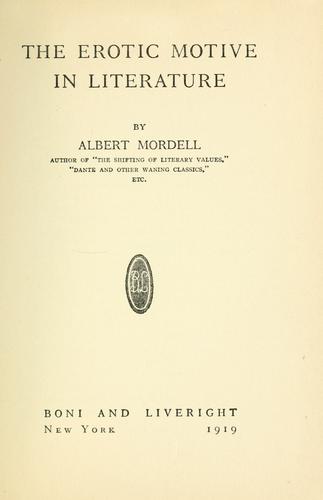
Erotic literature -- History and criticism; Psychoanalysis and literature; Sex in literature
"That leaves a heart high-sorrowful and cloy'd,
A burning forehead and a parching tongue."
He had to accept his lot and pretend to see some advantage in it as he
did in that of the youth on the urn:
"More happy love! more happy, happy love!
For ever warm and still to be enjoyed,
For ever panting, and for ever young."
The poem is the song of unsatisfied desires. Keats, frustrated in his
love, had one resource, to make poetry and create beauty out of his
sorrow. To the future he too would be like that lover created by an
ancient artist, panting for love ever young. The poem has such great
appeal because it strikes a note in us all.
In the _Ode to the Nightingale_ we also see evidence of his love
sadness because of Fanny. He expresses a wish to go away with the bird
from scenes
"Where youth grows pale, and spectre thin, and dies;
Where beauty cannot keep her lustrous eyes,
Or new love pine at them beyond to-morrow."
The nightingale has not known like him
"The weariness, the fever and the fret
Here where men sit and hear each other groan."
Miss Brawne had embittered his life and hence he must fly at least in
fancy through poetry with the bird. Again he finds consolation for his
unhappy love in poetry.
He has been half in love with death, he has thought of taking to drink;
he expressed both these ideas in previous poems. He is reminded that
the nightingale's song was heard by Ruth, because love is uppermost
in his mind. But he knows his fancied flight with the bird must end
shortly. He will soon come back to his real self with the vexing
thoughts of Fanny.
"Adieu the fancy cannot cheat so well
As she is famed to do, deceiving elf."
Then the music ceased, and he is back on earth again.
The unconscious sex symbolism in the wish to fly with the nightingale
is a further proof of his unsatisfied love.
The motive of both these great poems was then supplied by his
unsatisfactory love affair, but critics have not openly asserted the
fact. It wasn't a mere walk in the British Museum or in Brown's garden
that gave birth to the poems. These events merely incited him to put on
paper the poems which had already for some time past fermented in his
unconscious and were really produced by his repressed love for Fanny.
Had he been happy in love, it is very likely we would never have had
these poems. They are as personal as the poems previously mentioned
addressed directly to Fanny, as _La Belle Dame_, and the sonnet written
in the fly leaf of Shakespeare. The same unhappy longings gave rise to
them all, and they were all written within a few months of each other,
though I have no evidence as to the date of the sonnet and the lines to
Fanny.
Public-domain text, read in full here on John Shaqi.
Reviews
Reviews
No reviews yet
Be the first to share your thoughts on this work.
Elsewhere in the archive
Join the Discussion
Join the discussion
Sign in to leave a comment or review.
Sign InorCreate an account