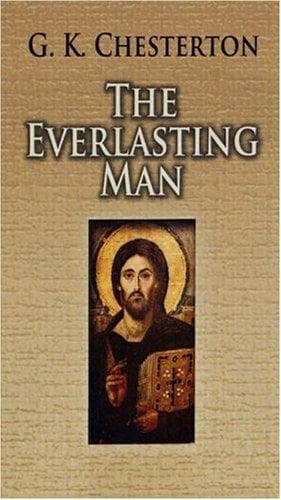
The Everlasting ManChesterton, G. K. (Gilbert Keith)
Religion
The Everlasting Man
Chesterton, G. K. (Gilbert Keith)
Catholic Church -- Apologetic works; Christianity and other religions; Religion
But there are two other reasons for beginning with the two fixed points
of Egypt and Babylon. For one thing they are fixed in tradition as the
types of antiquity; and history without tradition is dead. Babylon is
still the burden of a nursery rhyme, and Egypt (with its enormous
population of princesses awaiting reincarnation) is still the topic of
an unnecessary number of novels. But a tradition is generally a truth;
so long as the tradition is sufficiently popular; even if it is almost
vulgar. And there is a significance in this Babylonian and Egyptian
element in nursery rhymes and novels; even the newspapers, normally so
much behind the times, have already got as far as the reign of
Tutankhamen. The first reason is full of the common sense of popular
legend; it is the simple fact that we do know more of these traditional
things than of other contemporary things; and that we always did. All
travellers from Herodotus to Lord Carnarvon follow this route.
Scientific speculations of to-day do indeed spread out a map of the
whole primitive world, with streams of racial emigration or admixture
marked in dotted lines everywhere; over spaces which the unscientific
medieval map-maker would have been content to call ‘terra incognita,’ if
he did not fill the inviting blank with a picture of a dragon, to
indicate the probable reception given to pilgrims. But these
speculations are only speculations at the best; and at the worst the
dotted lines can be far more fabulous than the dragon.
Public-domain text, read in full here on John Shaqi.
Reviews
Reviews
No reviews yet
Be the first to share your thoughts on this work.
Join the Discussion
Join the discussion
Sign in to leave a comment or review.
Sign InorCreate an account