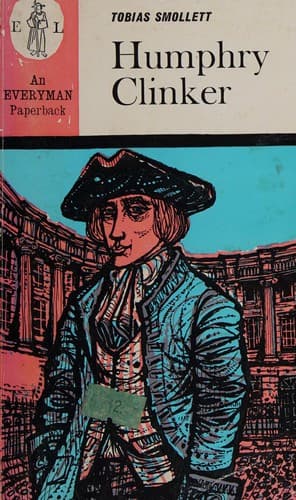
The Expedition of Humphry ClinkerSmollett, T. (Tobias)
General
The Expedition of Humphry Clinker
Smollett, T. (Tobias)
Epistolary fiction; Great Britain -- Fiction; Travelers -- Fiction
pother, as if it was a new discovery, like the Copernican system. Every
peculiarity of policy, custom, and even temperament, is affectedly
traced to this origin, as if the feudal constitution had not been common
to almost all the natives of Europe. For my part, I expect to see the
use of trunk-hose and buttered ale ascribed to the influence of the
feudal system. The connection between the clans and their chiefs is,
without all doubt, patriarchal. It is founded on hereditary regard
and affection, cherished through a long succession of ages. The clan
consider the chief as their father, they bear his name, they believe
themselves descended from his family, and they obey him as their lord,
with all the ardour of filial love and veneration; while he, on his
part, exerts a paternal authority, commanding, chastising, rewarding,
protecting, and maintaining them as his own children. If the legislature
would entirely destroy this connection, it must compel the Highlanders
to change their habitation and their names. Even this experiment has
been formerly tried without success--In the reign of James VI a battle
was fought within a few short miles of this place, between two clans,
the M’Gregors and the Colquhouns, in which the latter were defeated: the
Laird of M’Gregor made such a barbarous use of his victory, that he was
forfeited and outlawed by act of parliament: his lands were given to the
family of Montrose, and his clan were obliged to change their name.
They obeyed so far, as to call themselves severally Campbell, Graham, or
Drummond, the surnames of the families of Argyle, Montrose, and Perth,
that they might enjoy the protection of those houses; but they still
added M’Gregor to their new appellation; and as their chief was deprived
of his estate, they robbed and plundered for his subsistence.--Mr
Cameron of Lochiel, the chief of that clan, whose father was attainted
for having been concerned in the last rebellion, returning from France
in obedience to a proclamation and act of parliament, passed at the
beginning of the late war, payed a visit to his own country, and hired a
farm in the neighbourhood of his father’s house, which had been burnt
to the ground. The clan, though ruined and scattered, no sooner heard of
his arrival than they flocked to him from all quarters, to welcome his
return, and in a few days stocked his farm with seven hundred black
cattle, which they had saved in the general wreck of their affairs: but
their beloved chief, who was a promising youth, did not live to enjoy
the fruits of their fidelity and attachment.
Public-domain text, read in full here on John Shaqi.
Reviews
Reviews
No reviews yet
Be the first to share your thoughts on this work.
Elsewhere in the archive
Join the Discussion
Join the discussion
Sign in to leave a comment or review.
Sign InorCreate an account