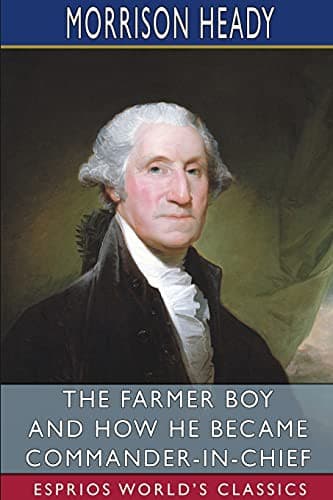
The Farmer Boy, and How He Became Commander-In-ChiefHeady, Morrison
History
The Farmer Boy, and How He Became Commander-In-Chief
Heady, Morrison
Washington, George, 1732-1799
Now, be it known, it was not the burden they had to carry of which
these generous and high-spirited Colonies complained so bitterly; but
that they should be denied the right of freely judging when and how
and wherefore they were to be taxed,--a right that had been the pride
and boast of Englishmen time out of mind. As for the matter of the
burden, had that been all, they could have danced, ay, and blithely
too, under Ætna and Sinai both, had the load but been of their own
choosing, of their own putting-on, and of their own adjusting.
To add to their distress and humiliation, this hardest and
unnaturalest of mothers now set over them judges, who were strangers
to them, and loved them not; who were to hold their places, not, as
theretofore, during good behavior, but at her will and pleasure.
Another right, as dear to Englishmen as life itself, was taken from
them,--to wit, the right of trial by jury; which gave every person,
great or small, suspected or known to be guilty of any crime against
the laws of the land, the privilege of a speedy trial, in open court,
in the place where the crime may have been committed, and by a jury of
honest and impartial men. Instead of this, the person accused was to
be taken aboard some ship-of-war, likely as not a thousand miles from
Christian land, and there tried by some authorities of the navy, who
would know but little, and must needs care still less, concerning the
person under trial, or his offence.
Under these and many other oppressions and injuries, the young
Colonies groaned grievously. But, for all that, they were not to be
subdued or broken. Time and again, they sent petitions to this
unkindest and wilfulest of mothers, beseeching her, in humble and
loving and dutiful terms, to remove this degrading burden from their
shoulders, and once more receive them as children into her maternal
bosom; warning her, at the same time, of what must be the melancholy
consequences, if she hearkened not to their prayers. Then was the
time, if ever, when, by a few kind words betokening a desire for
reconciliation, she might have secured and made fast the love of these
devoted and affectionate children for ever; and, had she been as wise
as she was powerful, even so would she have done. But, like the Egypt
of olden times, she did but harden her heart against them all the
more, even to the hardness of the nether mill-stone; and only sought
how she could the more easily grind them into obedience and
submission. She had grown to be mighty among the nations, this
Britannia. Her armed legions told of her power by land; her ships of
war and her ships of commerce whitened a hundred seas. The great sun,
that set on every kingdom of the known earth, she boasted never went
down on her dominion. Wherefore was she swollen and big with pride,
and from a high place looked haughtily down upon the little nations at
her feet. What height of presumption was it, then, in these
Public-domain text, read in full here on John Shaqi.
Reviews
Reviews
No reviews yet
Be the first to share your thoughts on this work.
Elsewhere in the archive
Join the Discussion
Join the discussion
Sign in to leave a comment or review.
Sign InorCreate an account