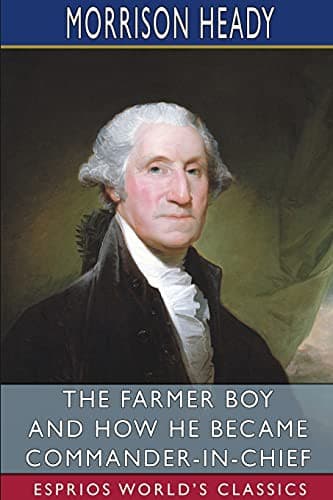
The Farmer Boy, and How He Became Commander-In-ChiefHeady, Morrison
History
The Farmer Boy, and How He Became Commander-In-Chief
Heady, Morrison
Washington, George, 1732-1799
judges; the danger that must ever threaten their liberties, if they
suffered troops of war to be quartered upon them in times of peace;
and, above all, that they should be denied the right of taxing
themselves, of making their own laws, and of regulating their internal
concerns, as seemed to their judgment wise and proper, through
representatives of their own choosing. To get redress for these and
similar grievances, was the chief, and, I may say, the only object for
which this first Congress had been called; for at that time, and for a
long time after, no one harbored such a thought as that of breaking
with the mother-country, with a view of achieving their independence.
To this end, they now applied themselves with deep and sober
earnestness, and brought to their work all the resources that their
wisdom and experience could command.
The first session of the Old Continental Congress lasted fifty-one
days. Such was the decorum with which they conducted their
proceedings, such the eloquence, force, and precision with which they
set forth their grievances, such the temperate and dignified tone that
marked their petitions to the king, and such the manliness, firmness,
and unwavering constancy with which they persisted in battling for
their right as freemen to be represented in the councils of the
nation, that thousands of their brothers across the Atlantic were
filled with wonder and admiration. And here, for once and for all, be
it known to you, my dear children, and, in justice to the British
nation as a people, never fail hereafter to bear it in mind, that
there were many, very many, perhaps a large majority, of our English
uncles, who deeply sympathized with our fathers in their troubles, and
heartily condemned the oppressive burdens heaped upon them by the king
and his ministers. Even in the House of Parliament itself were there
many of the greatest spirits of that age, who had all along opposed
these harsh and unjust measures of the government towards the
Colonies, and were now so impressed with all that marked the
proceedings of this first Colonial Congress, that they exerted
themselves in behalf of their oppressed brothers in America with more
zeal than ever before, and pleaded their cause in strains of eloquence
that shall ring in our ears, and dwell in our hearts, till history
shall tell us we have ceased to be a nation.
And well indeed they might admire and praise; for what with the
eloquence of such men as Henry and Rutledge, the learning of such men
as Hancock and Adams, the wisdom of such men as Washington, and the
pure and exalted character of them all, it was a body of men, the like
of which had never before assembled together in any age or country.
Public-domain text, read in full here on John Shaqi.
Reviews
Reviews
No reviews yet
Be the first to share your thoughts on this work.
Elsewhere in the archive
Join the Discussion
Join the discussion
Sign in to leave a comment or review.
Sign InorCreate an account