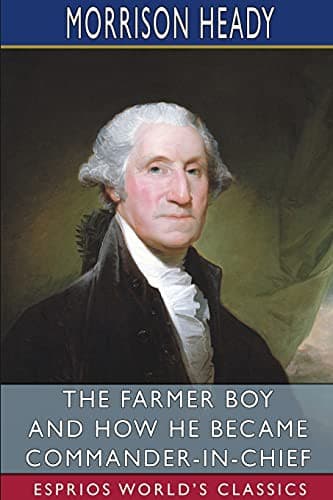
The Farmer Boy, and How He Became Commander-In-ChiefHeady, Morrison
History
The Farmer Boy, and How He Became Commander-In-Chief
Heady, Morrison
Washington, George, 1732-1799
To drive and keep back the French and their Indian allies, Gov.
Dinwiddie made a call on the Virginia militia, and wrote to the
governors of some of the neighboring provinces, urging them, for their
common defence, to do the same. To strengthen their borders, and give
security to their frontier settlers, a small party of pioneers and
carpenters were sent to build a fort at the Forks of the Ohio, as
Washington had recommended in his journal. This journal, by the way,
throwing, as it did, so much new light on the designs of the French in
America, was thought worthy of publication, not only throughout the
Colonies, but also in the mother-country. The good sense, skill,
address, and courage shown by the young Virginian throughout the late
expedition, had drawn upon him the eyes of his countrymen; and, from
that time forward, he became the hope and promise of his native land.
As a proof of this high regard, he was offered the command of the
regiment to be raised: which, however, he refused to accept; for his
modesty told him that he was too young and inexperienced to be
intrusted with a matter of such moment to his country. To Col. Fry, an
officer of some note in the province, the command of the regiment was
therefore given; under whom he was quite willing to accept the post of
lieutenant-colonel.
Notwithstanding the pressing danger that threatened all alike, the
people were shamefully slow in answering the summons to arms.
Washington had felt confident, that, at the very first tap of the
drum, squads upon squads of active, sturdy, well-fed, well-clothed
young farmers, moved by the same spirit with himself, would come
flocking to his standard with their trusty rifles, powder-horns, and
hunting-pouches, ready and eager to do their country service. Instead
of this, however, there gathered, about him a rabble of ragamuffins
and worthless fellows, who had spent their lives in tramping up and
down the country, without settled homes or occupations.
Some were without hats and shoes; some had coats, and no shirts; some
had shirts, and no coats; and all were without arms, or any keen
desire to use them if they had them. All this disgusted and
disheartened our youthful colonel not a little; for he was young, and
had yet to learn that it is of just such stuff that the beginnings of
armies are always made. The slender pay of a soldier was not enough to
tempt the thriving yeomanry to leave their rich acres and snug
firesides to undergo the hardships and dangers of a camp life; as if,
by failing to answer their country's call, and fighting in its
defence, they were not running a still greater risk of losing all they
had.
Public-domain text, read in full here on John Shaqi.
Reviews
Reviews
No reviews yet
Be the first to share your thoughts on this work.
Elsewhere in the archive
Join the Discussion
Join the discussion
Sign in to leave a comment or review.
Sign InorCreate an account