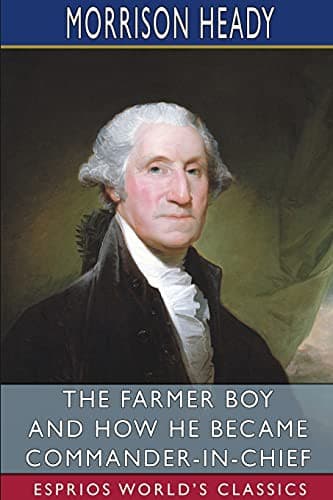
The Farmer Boy, and How He Became Commander-In-ChiefHeady, Morrison
History
The Farmer Boy, and How He Became Commander-In-Chief
Heady, Morrison
Washington, George, 1732-1799
Owing to the shameful neglect of those whose duty it was to send up
supplies, he and his men suffered much from the want of food,--many
days at a stretch sometimes passing by without their tasting bread. To
aggravate this new distress, the Half King and many of his warriors,
with their wives and children, now sought refuge in the fort from the
vengeance of the French and their savage allies; which added nothing
to their strength, and only increased the number of hungry mouths to
be fed. To this place, then, where gaunt famine pinched them from
within and watchful enemies beset them from without, Washington gave
the fitting name of Fort Necessity. Luckily for them, while in this
pitiable plight, days and days passed by, and still no avenging De
Villiers showed himself, though alarms were frequent.
Col. Washington now ordered Major Muse to bring up the rest of the
troops that had been waiting all this while at Wills's Creek, with the
heavy stores and cannon. To reward the friendly Indians for their
services and fidelity, Major Muse brought with him presents of
hatchets and knives, guns, powder and lead, tin cups, needles and
pins, beads, and dry-goods of every gaudy hue, and it may be, although
we can only guess it, a ruffled shirt or two. In addition to these,
there came a number of silver medals for the chief sachems, sent by
Gov. Dinwiddie at the suggestion of Col. Washington, who well knew how
much these simple people prize little compliments of this kind. Major
Muse handed out the presents, while Washington hung the medals about
the necks of the sachems, which yielded them far more delight, you
will be sorry to hear, than their good old missionary's catechism.
This was done with all that show and parade so dear to an Indian's
heart; and, to give a still finer edge to the present occasion, they
christened each other all over again: that is to say, the red men gave
the white men Indian names, and the white men gave the red men English
names. Thus, for example, Washington gave the Half King the name of
Dinwiddie, which pleased him greatly; while he, in his turn, bestowed
on his young white brother a long, high-sounding Indian name, that you
could pronounce as readily spelt backwards as forwards. Fairfax was
the name given a young sachem, the son of Queen Aliquippa, whose
eternal friendship to the English, it must be borne in mind, had been
secured by Washington, the previous winter, by the present of an old
coat and a bottle of rum.
Public-domain text, read in full here on John Shaqi.
Reviews
Reviews
No reviews yet
Be the first to share your thoughts on this work.
Elsewhere in the archive
Join the Discussion
Join the discussion
Sign in to leave a comment or review.
Sign InorCreate an account