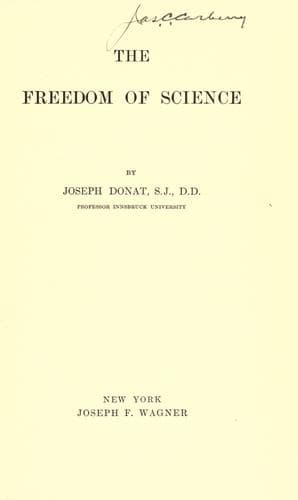
Free thought; Modernism (Christian theology) -- Catholic Church; Religion and science; Teaching, Freedom of
in our fate, the low and vulgar in the human soul, the difficult
complications of the social body: all unite in the question: Has
our existence any real sense or value? Is it not torn asunder to
an extent that we shall be denied truth and peace for ever?...
Hence it is readily understood why a gloomy pessimism is spreading
more and more, why the depressed feeling of littleness and
weakness is pervading mankind in the midst of its triumphs.”
Similar, and profoundly true, are the words spoken some years ago
by a noted critic in the “Literarische Zentralblatt” (1900): “A
painful lament and longing pervades our restless and peaceless
time. The bulk of our knowledge is daily increasing, our technical
ability hardly knows of difficulties it could not overcome ... and
yet we are not satisfied. More and more frequently we meet with
the tired, disheartened question: What’s the use? We lack the one
thing which would give support and impetus to our existence, a
firm and assured view of the world. Or, to be more exact, we have
found that we cannot live with the view of the world which in this
century of enlightenment has stamped its imprint more and more
upon our entire mental life. Materialism, in coarser or finer
form, has penetrated deeply our habits of thought, even in those
who would indignantly protest against being called materialists;
the name seemed to imply scientific earnestness and liberal views.
However, there was still left a considerable fund of old,
idealistic values, and as long as we could draw upon them we saw
in materialism only the power to clear up rooted prejudices, and
to open the road for progress in every field. To the newer
generation, however, little or nothing is left of this old fund,
hence, having nothing else but materialism to depend upon, they
are confronted by an appalling dreariness and emptiness of
existence. And ever since the man on the street has absorbed the
easy materialistic principles, and looks down from the height of
his ‘scientific’ view of life contemptuously upon all
reactionaries, we have become aware of the danger that imperils
everything implied by the collective word ‘humanism.’ This
explains the plethora of literature which in these days deals with
the questions of a world philosophy.” Who is not reminded after
reading this mournful confession of the words of _St. Augustine_:
“Restless is our heart, till it finds rest in Thee”?
Public-domain text, read in full here on John Shaqi.
Reviews
Reviews
No reviews yet
Be the first to share your thoughts on this work.
Elsewhere in the archive
Join the Discussion
Join the discussion
Sign in to leave a comment or review.
Sign InorCreate an account