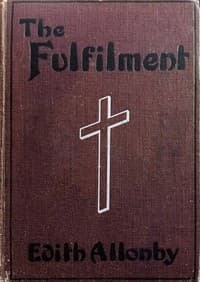
Fantasy fiction; Heaven -- Fiction; Hell -- Fiction; Unfinished books
“This was the wisest and the greatest plan—or seemed to be—to
let mankind learn by effort and endeavour to reach with purity the
Highest—to withhold nothing from man, yet to grant nothing till he had
found it.
“Then asked Plucritus:—
“‘And in this striving after wisdom, which side must the choice fall?’
“‘It may fall either—he is given a free will.’
“‘Is this race of men then to rival and outshine ourselves, that it may
pick and choose betwixt us?’
“You will understand there was nothing but truth and purity and beauty
in his words. He spoke as God despising propositions, not as man
striving against his brother man.
“‘When man has once discovered good and evil he will be as God,’
Michael replied.
“For some space of time there was silence, till at last Plucritus rose.
“‘I would not willingly detain you, but this project seems to me
absurd. To build up with Nature’s aid beings like ourselves! Nature,
who never saw us, but followed blindly on the guiding principles that
we laid down! Can anything exist that has not built itself? What is
our strength and beauty but that we raised ourselves and now maintain
ourselves as becomes true spirits? What weaklings would you introduce
and draw towards us? What do we need with outside sycophants? Are
we dull and life grows wearisome, we can change, as often in the past.
But you are not dull. You are striving to break the bond of friendship,
as it has been broken in so many spheres before mere trifle, an
introduction of an alien element. Vestasian seeks to give pleasure to
an inferior race. Give it and make them happy. Let them be thankful.
Spare them the pain that runs in other orbits, for history repeats
itself, and as in other places _choose evil they shall not_, and
who can then choose good?’
“‘Why not?’ asked Vestasian, who had listened earnestly.
“‘It does away with the Free Will,’ Plucritus answered, and laughed.
“After that there was much argument, and gradually the rift began to
grow and widen, and we discovered too late, or not too late, that it
had been caused among us by the little biped—Man.
“So often do little things produce great strife and suffering.
“Thus it grew to a point of great dispute whether humanity was to have
a free will or no, whether it was to receive gifts without striving
and return them or to strive for wisdom, and in acquiring it gain
everything. And after all, like all really little things, it was a
great one. It affects us more nearly than even the wisest foresaw. It
meant giving up so much, even of our own bodies, and entailed suffering
and concentration of thought and purpose which happily by our nature
adds to our strength and beauty and never takes away.
Public-domain text, read in full here on John Shaqi.
Reviews
Reviews
No reviews yet
Be the first to share your thoughts on this work.
Elsewhere in the archive
Join the Discussion
Join the discussion
Sign in to leave a comment or review.
Sign InorCreate an account